News   GLOBAL  |  Apr 02, 2020
 11K     0 
News   GLOBAL  |  Apr 01, 2020
 43K     0 
News   GLOBAL  |  Apr 01, 2020
 6.7K     0 
115/190km are in tunnels? 40 in viaducts? yea no never going to happen. 90 billion is lowballing that.
Nevermind the fact this is just a phase 1. the rest of the network between cities is like 5x the distance
also 200kph in tunnels lol.
stations 50m below ground HOLY

This is a shitshow waiting to happen. cant believe i hadnt heard of this before.

Only thing noteworthy is like 6 stations in 200km.Whats the point lol. it will never touch 300kph lol
Are they building a multi-city subway?
 
Are they building a multi-city subway?
it sounds like it. i looked at google maps. it really is a tough location. lots of marsh and lakes plus a national park. there really is no other option other than going underground. Even their roads are like super windy. I did hear mention of a existing rail line that caps at 60kph.

This is everything Alto cant be. surface alignments vs tunnels. Speed tradeoffs when adding new stations.
 
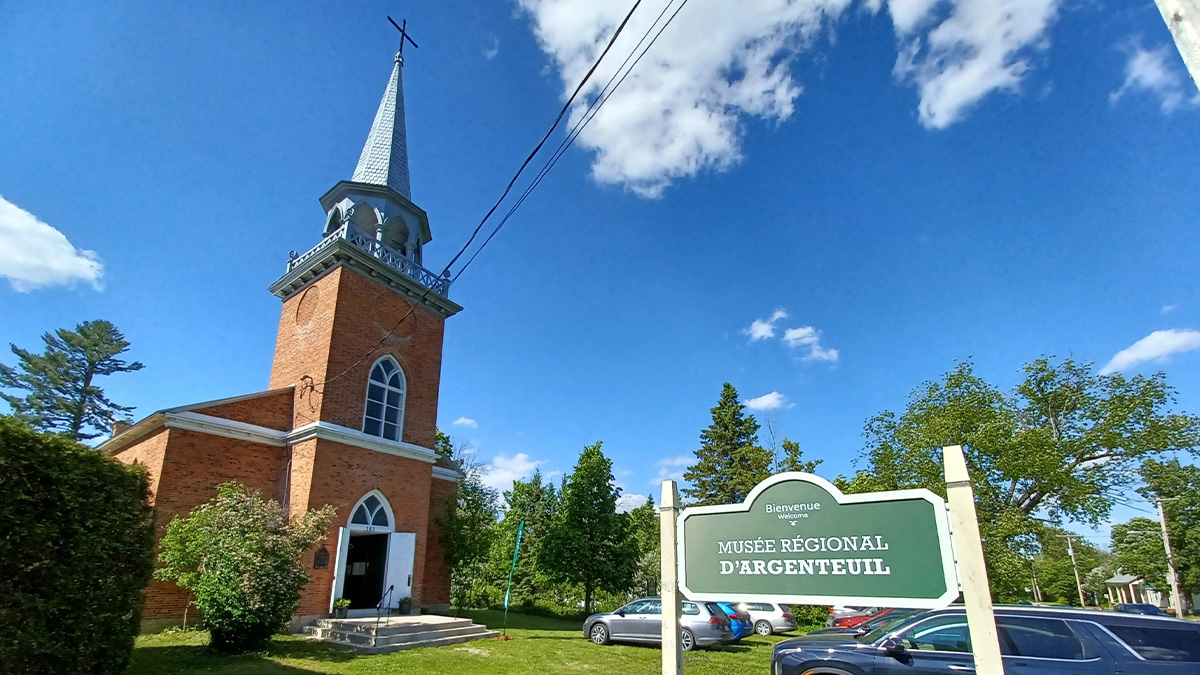
A new opponent has entered the chat: a museum.

Apparently a new rail corridor should not be built in a particular area, in order to avoid damaging the historical "major engineering projects" that have "profoundly marked the territory" in the past.

Those major engineering projects: cultural heritage of regional development, must be preserved. A new major engineering project that could also mark the territory: no thanks, not part of our cultural heritage of regional development.

“Major engineering projects profoundly marked the territory. Argenteuil’s heritage includes industrial, architectural, and commemorative sites that are important to our history. These include, among others, the Grenville Canal, the Carillon Monoliths, the Carillon Barracks, the Methodist Hall, St. Mungo’s Church, and Lemuel Cushing’s General Store… These are witnesses to the past that illustrate the history of regional development,” said Musée régionale d’Argenteuil Regional Museum Director and report author Robert Simard.

 
A new opponent has entered the chat: a museum.

Apparently a new rail corridor should not be built in a particular area, in order to avoid damaging the historical "major engineering projects" that have "profoundly marked the territory" in the past.

Those major engineering projects: cultural heritage of regional development, must be preserved. A new major engineering project that could also mark the territory: no thanks, not part of our cultural heritage of regional development.


Sounds like a bit of a 'shotgun' argument; particularly when they toss in a general store as a major engineering work. I get historians, our daughter is one, but they have to recognize they exist in the present world. Assuming it is funded by the municipality, I hope they have council onside with their position.

The Aboriginal angle is interesting. I don't follow it closely but it appears that their position is muted at best. Perhaps they are keeping their powder dry (which would be a bit uncharacteristic).
 
Sounds like a bit of a 'shotgun' argument; particularly when they toss in a general store as a major engineering work. I get historians, our daughter is one, but they have to recognize they exist in the present world. Assuming it is funded by the municipality, I hope they have council onside with their position.

The Aboriginal angle is interesting. I don't follow it closely but it appears that their position is muted at best. Perhaps they are keeping their powder dry (which would be a bit uncharacteristic).

Some municipalities seem to take the position of supporting Alto provided a specific local benefit is provided. An example is Smiths Falls, which has said they would support the project if they get a station or (based on a consultant's report) a maintenance and storage facility. Considering the low probability of stops in smaller places, this approach might be shrewd politics.

Anyway, the municipality where this particular museum is located, unless I'm mistaken, is prepared to also support Alto if they get a station. The extra juice here is Mirabel airport. Not sure whether the proposal will work, or whether they have thought about the maintenance and storage facility concept yet. A freight airport and a high-speed rail maintenance and storage facility might have some synergies. I guess we''ll see:
 
Last edited:
Some municipalities seem to take the position of supporting Alto provided a specific local benefit is provided. An example is Smiths Falls, which has said they would support the project if they get a station or (based on a consultant's report) a maintenance and storage facility. Considering the low probability of stops in smaller places, this approach might be shrewd politics.
I would be very surprised if there are not plans for Smiths Falls to get something for its troubles. It's one of the most significant population centres in the corridor, after all. Smiths Falls or Perth might be a good spot for a lay-by yard.

I would also consider the nearest point on the line to Smiths Falls a great place for a simple side platform station that serves one train a day in each direction. I guess it depends on whether it's deemed feasible, but I think there are a couple spots along the corridor that would work well for once-a-day service with barebones facilities: between Oshawa and Port Perry, eastern Lanark County, Hawkesbury, and Joliette.
 
Won't somebody please spare a thought for the poor, beleaguered "francophone owners of private forest properties in Eastern Ontario"?

This whole piece is a master-class in NIMBY tropes, such as: the project needs more study but also costs too much; the project should be cancelled if it would benefit millions of city-dwellers more than thousands of rural residents; an existing highway corridor should be used with no analysis showing it could work or how much it would cost; project proponents are politically-motivated bad actors so the foresters are hapless victims with no voice; etc.


None of this communication answers the obvious questions that really matter: what is the negative impact of a new rail corridor on a private forest property, if any, and why couldn't money compensate for any negative impact?
 
I am normally not a fan of value engineering, but in the case of Alto I hope it is happening, and we UTers might want to keep those principles in mind while we imagine, er, anticipate what Alto is planning. The proposal needs some rigourous scope control if it is going to meet public approval and get built expeditiously.

Does this system really need to be 300km/h end to end, or could land and construction costs be greatly reduced by allowing sections of 200 km/h - or even specific slow ordered curves - and would that really harm the end to end timimg all that much ?

Planning more expensive terminals in central locations may be prudent, but allowing scope to expand by including major diversions of freight lines seems unlikely to get approved.

With the sticker price so high, we need to be focussed on how to get the most value for the least cost.

- Paul

The problem with this train of thought is that the places where allowing for slower maximum speeds, dense urban areas where the built environment restrict possible routes and/or make full 300 Km/Hr speeds cost prohibitive, and approaches to stations where trains will naturally be slowing down to stop anyway. Are not the areas that these opponents to ALTO are suggesting lower speeds to permit curvier tracks be built. It is in fact the rural regions that are ideal for track straightening to maximum speed possible to permit reasonable travel times, and make up time for those areas where compromise was necessary,.
 
I would be very surprised if there are not plans for Smiths Falls to get something for its troubles. It's one of the most significant population centres in the corridor, after all. Smiths Falls or Perth might be a good spot for a lay-by yard.

I would also consider the nearest point on the line to Smiths Falls a great place for a simple side platform station that serves one train a day in each direction. I guess it depends on whether it's deemed feasible, but I think there are a couple spots along the corridor that would work well for once-a-day service with barebones facilities: between Oshawa and Port Perry, eastern Lanark County, Hawkesbury, and Joliette.
More people live in my building than live in Smiths Falls. The current VIA stop is surely enough for their needs.
 
The design constraints between 200 and 300km/h may seem incremental but they are not. I have been working with a well published railway engineer who worked for 35 tears at barbardier in eastern Ontario. He suggests that in winter reliable speeds above 200km/h will be impossible without intensive maintenance. Raising a railway solves many problems in terms of cold weather engineering and this has been the Chinese approach. I talked at length with David Cook (VP systems and Integartion} at Alto and although he was vague he conformed this was not an option for ALTO. Therefore the ground engineering becomes more challenging and the ground remediation and stiffness requirements required for tolerance control which dictate comfort and safety. Each overpass will need to be specifically engineered for stiffness matching, be it a ballastless or ballasted track. Hence the engineering complexity around differential settlements will be extreme. As I had experience working with SNCF in France, troublesome sections of track will have severe long term maintenance implications. Maintenace backlogs will compound.
...

A barber with 35 tears you say? Sound quiet depressing!
 
The problem with this train of thought is that the places where allowing for slower maximum speeds, dense urban areas where the built environment restrict possible routes and/or make full 300 Km/Hr speeds cost prohibitive, and approaches to stations where trains will naturally be slowing down to stop anyway. Are not the areas that these opponents to ALTO are suggesting lower speeds to permit curvier tracks be built. It is in fact the rural regions that are ideal for track straightening to maximum speed possible to permit reasonable travel times, and make up time for those areas where compromise was necessary,.

It's a delicate balance, and not to be overused, I agree.... but in principle, if the odd zig or zag avoided a particularly problemmatic objection, or saved a great deal of money in avoiding a particularly expensive or technically difficult straightening, say around rock formations or ecologically sensitive areas, I would say it's the right decision.

It's always interesting to drive around Southern Ontario and note where a very straight hydro transmission line makes an abrupt turn or diversion around something. We may have forgotten who or why that happened, but there was likely a reason - in some cases the result of court challengers. The more of that we can avoid, the better, even if it costs a few minutes end to end.

- Paul
 
More people live in my building than live in Smiths Falls. The current VIA stop is surely enough for their needs.
9000 people live in your building? 😲

I don't know if a limited service station in that area is a good idea or not, but high speed rail stations in rural areas to serve nearby small towns aren't unheard of. Smiths Falls, Perth, and Carleton Place have a combined population of around 30,000.
 
Sounds like a bit of a 'shotgun' argument; particularly when they toss in a general store as a major engineering work. I get historians, our daughter is one, but they have to recognize they exist in the present world. Assuming it is funded by the municipality, I hope they have council onside with their position.

The Aboriginal angle is interesting. I don't follow it closely but it appears that their position is muted at best. Perhaps they are keeping their powder dry (which would be a bit uncharacteristic).

BuT dOn'T yOu KnOw AlL tHe GrEaT aRcHiTeCtUrAl aNd EnGiNeErInG wOrKs HaPpEnEd iN tHe PaSt. ThErE's No MoRe GrEaT wOrKs To Do AnYmOrE!
 

Back
Top