News   GLOBAL  |  Apr 02, 2020
 11K     0 
News   GLOBAL  |  Apr 01, 2020
 43K     0 
News   GLOBAL  |  Apr 01, 2020
 6.8K     0 
RER and LRT and subway serve completely different types of trips, so I’m not sure what the point of this comparison is. It’s like saying we don’t need cars now that we have airplanes.

RER is targeted at long distance trips, while LRT is targeted at short to medium trips. More than half of all trips in Toronto (regardless of mode) are less than 5 km.
With the commuter train model that might have been true, but RER will be just as useful for short trips as light rail or subways. Short trips will likely make up a decent percentage of RER ridership. The Eglinton Crosstown, just by virtue of its name, is being sold as a rapid transit line that gets riders across the whole city. I'd expect to see a lot of overlap in the trip distances of all the different rail transit modes. Referring to LRT as rapid transit is a bit of a stretch when the trains have to wait at the same lights as all the other traffic. LRT can be better (many examples have already been posted), so why settle for less?

Good to know that Council is looking at better options.
 
Last edited:
With the commuter train model that might have been true, but RER will be just as useful for short trips as light rail or subways. Short trips will likely make up a decent percentage of RER ridership.
I'm not sold on this concept yet I still see it as being something for people outside of Toronto and an extension of the existing go network.
 
Mehhh. I don't really agree with grade-separating a bunch of intersections, specifically because Crosstown East didn't get the same treatment. Why now are we having the discussion about the benefits of affordable grade-separation and dropping midblock stations? Where was Metrolinx to do the same after they signed a deal with the devil behind closed doors for Crosstown East? We should've just built the whole bloody Crosstown as light metro from the start, which obviously would've seamlessly transitioned to Line 3 (and avoided SSE altogether). No LRT, just 100m long subways running on a line from Renforth-Pearson to Malvern.

Yes LRT can be way more dynamic than what's currently proposed with Crosstown West (which is almost all tram-style in-median). But I think many are underestimating the damage to neighbouring areas when trying to prioritize such a line while maintaining the "LRT" aspect. Grade-separating intersections involves dipping and diving. Fine in theory, but with long sections of concrete walls and structures it'd make large stretches of Eglinton impassible to peds. Trying to speed things up by using side-of-road alignment? Again concrete walls and maybe chainlink fencing. Crossing arms for side streets? People don't want that. Although elevated lines are continually viewed as a nonstarter here, I think compared with running walls and fencing down the street that area residents would embrace an elevated solution.

It's clear the support for grade-separating intersections and how it increases speed/reliability. A takeaway is that people genuinely want a subway/light metro on Eglinton. Alas we missed the boat by going forward with tram-style Eglinton East and the dropping of Line 3 interlining. So, may as well just continue with current plans for Eglinton West.
 
With the commuter train model that might have been true, but RER will be just as useful for short trips as light rail or subways. Short trips will likely make up a decent percentage of RER ridership.

I'm not sold on this concept yet I still see it as being something for people outside of Toronto and an extension of the existing go network.

I mean, I live south of Christie Pits. I'm totally excited to be able to head west to Lansdowne (via Bloor-Danforth), then transfer northbound to the Eglinton Crosstown (via GO Barrie), or keep ongoing to York University.

Call those short trips or long trips, but I don't at all understand how this is all "something for people outside of Toronto". It's adding pieces to an integrated transit grid we badly need.
 
Mehhh. I don't really agree with grade-separating a bunch of intersections, specifically because Crosstown East didn't get the same treatment. Why now are we having the discussion about the benefits of affordable grade-separation and dropping midblock stations? Where was Metrolinx to do the same after they signed a deal with the devil behind closed doors for Crosstown East? We should've just built the whole bloody Crosstown as light metro from the start, which obviously would've seamlessly transitioned to Line 3 (and avoided SSE altogether). No LRT, just 100m long subways running on a line from Renforth-Pearson to Malvern.

Yes LRT can be way more dynamic than what's currently proposed with Crosstown West (which is almost all tram-style in-median). But I think many are underestimating the damage to neighbouring areas when trying to prioritize such a line while maintaining the "LRT" aspect. Grade-separating intersections involves dipping and diving. Fine in theory, but with long sections of concrete walls and structures it'd make large stretches of Eglinton impassible to peds. Trying to speed things up by using side-of-road alignment? Again concrete walls and maybe chainlink fencing. Crossing arms for side streets? People don't want that. Although elevated lines are continually viewed as a nonstarter here, I think compared with running walls and fencing down the street that area residents would embrace an elevated solution.

It's clear the support for grade-separating intersections and how it increases speed/reliability. A takeaway is that people genuinely want a subway/light metro on Eglinton. Alas we missed the boat by going forward with tram-style Eglinton East and the dropping of Line 3 interlining. So, may as well just continue with current plans for Eglinton West.

I see some value in building Crosstown West to a higher standard than Crosstown East. The East (Don Mills to Kennedy) is mostly a line with a local function, while the West has an important destination at the far end; the employment cluster south of Pearson. Faster trips will make transit a more appealing choice to reach that cluster.

Not sure how many more trips that could bring, but at least it is worth trying.

Regarding the impact of grade separation on the neighborhood:

a) That part of Eglinton doesn't see lots of pedestrians today, hence not that much to lose.

b) There are examples of really nice transit portals in the world, decorated with bushes and flowers etc. TTC tends to build portals looking like concrete slabs, but that's not the only option.

c) We can choose which intersections to grade-separate. If we want say Kipling and / or Royal York intersections to remain at grade and walkable, that can be done. Mid-block intersections with at-grade stops will remain walkable as well, assuming that there are pedestrians who actually have reasons to walk there.
 
Last edited:
I'm not sold on this concept yet I still see it as being something for people outside of Toronto and an extension of the existing go network.
Just take a look at how other RER style systems operate. They're very well used for short trips in the city core and are often pretty much indistinguishable from other forms of rapid transit. There's no reason for RER in Toronto to be any different, especially since city council now officially supports fare integration.

Yes LRT can be way more dynamic than what's currently proposed with Crosstown West (which is almost all tram-style in-median). But I think many are underestimating the damage to neighbouring areas when trying to prioritize such a line while maintaining the "LRT" aspect. Grade-separating intersections involves dipping and diving. Fine in theory, but with long sections of concrete walls and structures it'd make large stretches of Eglinton impassible to peds. Trying to speed things up by using side-of-road alignment? Again concrete walls and maybe chainlink fencing. Crossing arms for side streets? People don't want that. Although elevated lines are continually viewed as a nonstarter here, I think compared with running walls and fencing down the street that area residents would embrace an elevated solution.

It's clear the support for grade-separating intersections and how it increases speed/reliability. A takeaway is that people genuinely want a subway/light metro on Eglinton. Alas we missed the boat by going forward with tram-style Eglinton East and the dropping of Line 3 interlining. So, may as well just continue with current plans for Eglinton West.
I don't think there would be any damage to the area. That stretch of Eglinton is already a pedestrian wasteland. The line could be designed to maintain the mixed use trails and side streets that are already there. I don't think we need to give up on Eglinton West just because Eglinton East was done streetcar-style.

Crossing arms for side streets? People don't want that.
But how do you know that? As far as I know the option for that style of line has never been presented to Torontonians. Unless people from the neighbourhood have been to cities like Calgary and ridden their system, I doubt they'd have any idea that such a design exists.
 
I see some value in building Crosstown West to a higher standard than Crosstown East. The East (Don Mills to Kennedy) is mostly a line with a local function, while the West has an important destination at the far end; the employment cluster south of Pearson. Faster trips will make transit a more appealing choice to reach that cluster.

With the East though the important destination was SC, that assuming we went forth with an integrated Line 3+5. And between Kennedy and McCowan the hard work of making a grade-separated section was done >30yrs ago, so in a way the case for maintaining separation between Leslie and Kennedy was just as strong as Mt Dennis to Pearson-Renforth.

b) There are examples of really nice transit portals in the world, decorated with bushes and flowers etc. TTC tends to build portals looking like concrete slabs, but that's not the only option.

Not just portals (surface to underground and vice versa). The transition to elevated (surface or underground to a raised guidway) would probably have a bigger effect on the permeability of the streetscape and its environs. Naturally these can and should be made attractive with landscaping, but still these transition zones would entail maybe 200m of structure and fencing - multiplied by 2 for the opposing end, then multiplied by however many intersection they want to grade-separate. At which point with all the dipping and diving it begs the question whether we should've just had the line as a fully grade-separated 'light' subway from the start.

I don't think there would be any damage to the area. That stretch of Eglinton is already a pedestrian wasteland. The line could be designed to maintain the mixed use trails and side streets that are already there. I don't think we need to give up on Eglinton West just because Eglinton East was done streetcar-style.

True. Tho one thing I'm interested in, and how it relates to the line as a whole, is speed limits. If the City ever decides to lower speed limits on roads like Eglinton, will the Crosstown follow suit? Considering it's part of the traffic system and is only segregated by a small concrete curb I believe it would. With VisionZero I wouldn't be surprised to see a lowering. In effect the entire Crosstown West could see its max speed drop by 20% (60kmh->50kmh).

Even with major intersections grade-separated, these midblock sections would have to follow the speed limits. However if we want to maintain its 60kmh indefinitely, or even increase to 80, it again should have us question whether LRT was the right option. But it's too late for that debate.

But how do you know that? As far as I know the option for that style of line has never been presented to Torontonians. Unless people from the neighbourhood have been to cities like Calgary and ridden their system, I doubt they'd have any idea that such a design exists.

Oh that was just an example carried over from previous pages re: improving or fortifying LRT like other cities. I wouldn't expect crossing arms here, however with us now scrutinizing extremely key aspects of the project so late in the game I think it's possible they'll be brought up.
 
True. Tho one thing I'm interested in, and how it relates to the line as a whole, is speed limits. If the City ever decides to lower speed limits on roads like Eglinton, will the Crosstown follow suit? Considering it's part of the traffic system and is only segregated by a small concrete curb I believe it would. With VisionZero I wouldn't be surprised to see a lowering. In effect the entire Crosstown West could see its max speed drop by 20% (60kmh->50kmh).

I don't get why Crosstown West speeds would be reduced. It has a fixed route, no turning, no racing with the rest of the traffic. Transit drivers are incredibly careful, well trained, never distracted, etc. It's overall extremely unlikely to hit pedestrians and there's little reducing speeds can mitigate.
 
I don't get why Crosstown West speeds would be reduced. It has a fixed route, no turning, no racing with the rest of the traffic. Transit drivers are incredibly careful, well trained, never distracted, etc. It's overall extremely unlikely to hit pedestrians and there's little reducing speeds can mitigate.

It would be reduced because street-running vehicles need to abide by the posted speed limit. The purpose of reducing the speed limit is so that when a collision occurs, the collision is less likely to be fatal for the pedestrian. I personally know someone who spent a lengthy stint in rehab after being hit by a Spadina streetcar, so it does happen, regardless of what you may think.

This is one of the advantages of complete grade separation: complete segregation means that it can go at whatever speed it wants.
 
It would be reduced because street-running vehicles need to abide by the posted speed limit. The purpose of reducing the speed limit is so that when a collision occurs, the collision is less likely to be fatal for the pedestrian. I personally know someone who spent a lengthy stint in rehab after being hit by a Spadina streetcar, so it does happen, regardless of what you may think.

This is one of the advantages of complete grade separation: complete segregation means that it can go at whatever speed it wants.

I don't think pedestrians should be encouraged to cross LRT tracks apart from controlled intersections. Otherwise no speed limit can help.
 
I don't think pedestrians should be encouraged to cross LRT tracks apart from controlled intersections. Otherwise no speed limit can help.

But even if the tracks were fenced off in between intersections, the problem spots are still the intersections. If you're going 150 km/hour in a tunnel/in the sky that's fine, but you can't barrel through intersections at that speed, even if you have a green light.

Again, the purpose of the speed limit isn't just to prevent collisions from occurring since someone can always dart out, hidden behind an oncoming streetcar. The purpose of the reduced speed limits is to reduce the impacts when they inevitably do occur. The road system needs to allow for human error, so that a moment of inattentiveness isn't a death sentence. At least that's the goal of vision zero.
 
So now we are no longer just fear mongering pedestrian safety but also the idea that possibly in the future eglinton might get a lower speed limit which might slow down the lrt. The list of fake bs excuses to justify ones transit fantasies is unending.
 
So now we are no longer just fear mongering pedestrian safety but also the idea that possibly in the future eglinton might get a lower speed limit which might slow down the lrt. The list of fake bs excuses to justify ones transit fantasies is unending.

Speed limits impact travel time, and there is a real and not-negligible chance that Eglinton would have its speed limit reduced (despite your characterization as "fearmongering" and "fake bullshit".) Especially since City planning has this bizarre vision of Eglinton west as being "just like St. Clair", speed limits will likely be reduced to improve the pedestrian experience.

Lower speed limits part of Toronto plan to reduce pedestrian deaths
(this is targeted at specific arterials across the city, not a blanket limit, but the fact that a center-right car-centric mayor proposes this shows what could happen if we get a more downtown left-wing mayor)

Reduced speed limits part of Tory's 'master plan' to improve road safety

Lower Toronto speed limits by 10 to 20 km/h to protect pedestrians, chief medical officer says
Dr. David McKeown advocates a 30 km/h speed limit on residential streets and a citywide speed limit of 40 km/h on all other streets

Life in the not-so-fast lane: Montreal to reduce speed limits by 2019
Montreal drivers are going to have to hit the brakes as Mayor Denis Coderre announced plans to reduce speed limits on many of the city’s streets.

The new limits will be:

  • 30 km-per-hour on residential streets, in school zones, in front of playgrounds and on commercial streets with one lane in each direction.
  • 30 km-per-hour in Old Montreal, with some roads having a limit of 20 km-per-hour.
  • 40 km-per-hour in industrial areas and on the main arteries of the city centre.
  • 50 km-per-hour on the main arteries of sectors outside the city centre

CITY OF MONTREAL MULLS OVER REDUCING SPEED LIMITS ACROSS THE ISLAND
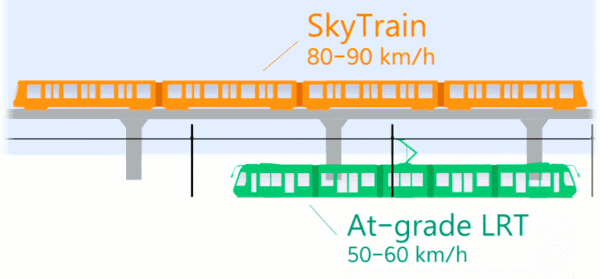
SkyTrain-vs-LRT-speeds-300x140@2x.png


However, I don't think the reduced top speed would have as much of an impact on travel times as all the red lights that it needs to stop at.

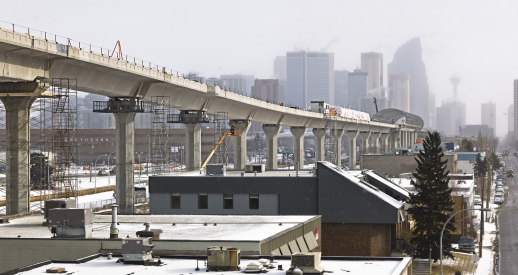
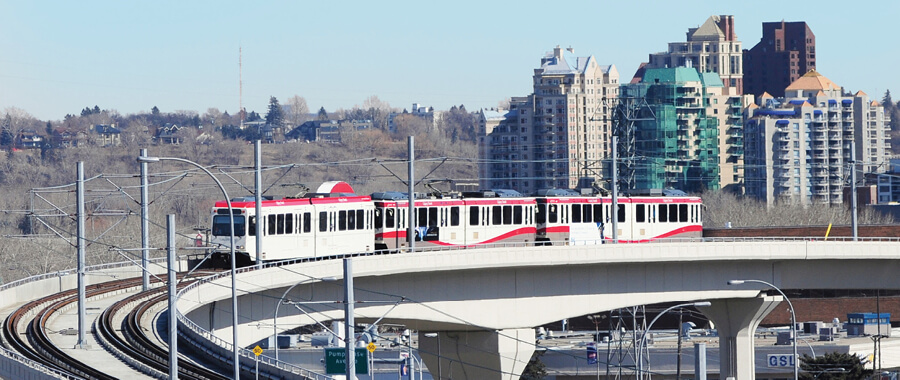
Elevated sections are not unusual for LRTs. For instance, here is Calgary's "new" (2012) west LRT :
Elevated-Guideway2-full.jpg

13_1298565266.jpg


Calgary-West-LRT.jpg
 

Back
Top