News   GLOBAL  |  Apr 02, 2020
 11K     0 
News   GLOBAL  |  Apr 01, 2020
 43K     0 
News   GLOBAL  |  Apr 01, 2020
 6.8K     0 
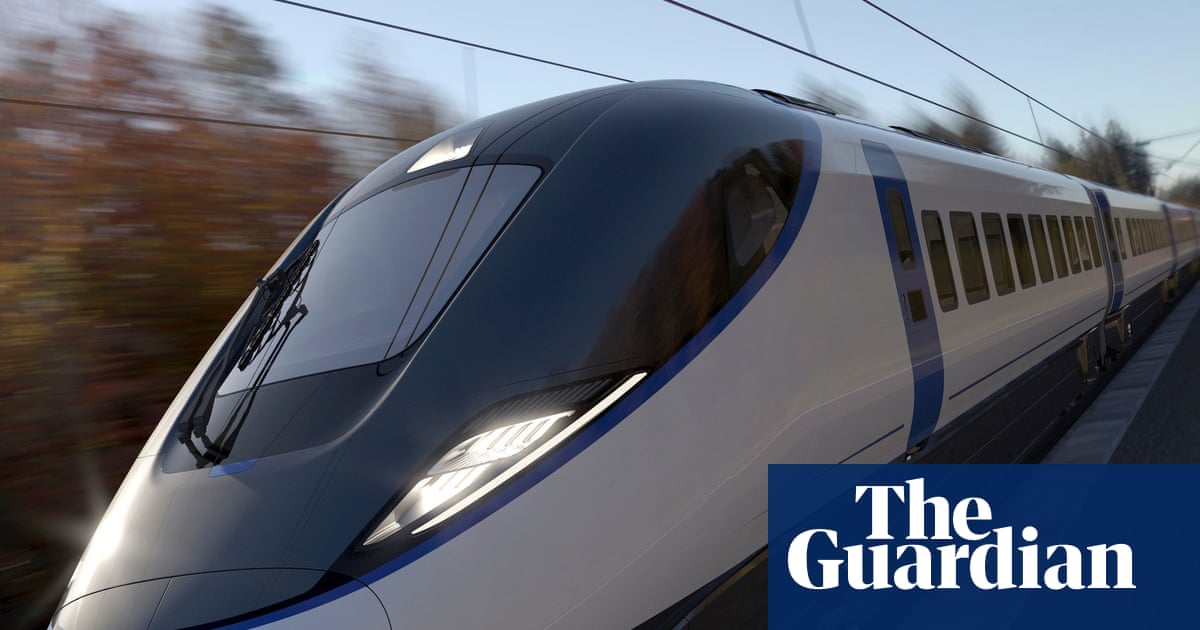
Extremely disappointing that they want to drop the top speed from 360km/h to 320km/h. All in an attempt to shave £2.5 million off of a budget that's already been blown out the water.

That is 2.5 billion in capital, more in operating savings, and brings in conformance to a well established standard (++ risk mitigation).

As the article posted by thaboss mentions, HS2 truly was overspec’d in a number of ways.
 
I am guessing you did not pay attention when you watched the movie Who Framed Roger Rabbit. The collusion that led to the car centric culture, especially in North America is not organic. It was forced and pushed on us. How much better would our smaller cities, like the one I live in; Sudbury, would be much better had they maintained and even expanded their streetcar lines? How much better had Via been properly funded instead of cut into irrelevance? How much better would Via be had CN remained owned by the federal government?

You are correct, I was busy reading articles and history books - not watching cartoons.

The emergence of road networks was a critical economic driver that enabled agriculture, industry, education, communication, and social cohesion.

Once roads were built, there was a very cheap and ample transportation option available to the populace. Are you saying our road network was forced upon the populace? Should we have denied people access to that resource such that roads sat empty and only used by buses and trucks? Could we have educated the populace using railway school cars but no school buses? Were we better off with one room rural schoolhouses?

The decline of small town streetcars was generally due to their WWI-ish era fleet and track reaching end of life, concurrent with the roads having reached a level where an investment in bus transit was much more economic than renewal of streetcars. The success of bus transit in those cities then depended on ridership and driving alternatives. Generally those decisions were political and reflected what the voters would accept, or not. Even where marginalised groups and low income riders were dependent on transit, the bus was generally accepted as a viable accommodation.

Post WWII, in cities where streetcars were lost there was lament and nostalgia, but general public acceptance - not opposition. The public generally bought in. Only in Toronto in the 1970's was there an actual grass roots uprising to save the streetcars.

As for passenger rail, you misunderstand how many of those abandonments pre-VIA were triggered by the loss of mail and express traffic...to roads. The passenger counts had already diminished.

I'm not saying we got things right with VIA.... but by 1978 we had a road network that made much of the old system irrelevant.

We may have struggled to make best use of public transit, but its decline was not a conspiracy. Until the roads were full, they worked well.

- Paul



I know its been discussed but can someone articulate why HS2 has such high costs and whats causing all this delay ?

In what ways does the development of ALTO differ meaningfully from HS2?
In some ways HS2 and CAHSR is very similar. ramping from 0-100 in like a short time. failure to plan for property aquisition, scope creep and not doing detailed design.

CAHSR had to get shovels in the ground immediately just to get the funds from the feds in 08 they had to scale super quickly, skipping a large majority of the detailed design of the route.
Hell they dont even know how to tunnel the section between LA and Palmdale.

HS2 is similar. They dont even have design for the main London station at Euston

Alto while moving slowly relatively speaking is doing a better way of getting all the reviews out of the way quickly, not letting landowners hold the project up. Which comes at a cost, but I digress.

There are lessons to be learned here. Some the UK government has learned over the last year. Maybe if that project ran like the last year the whole last decade, it would be running by now
 
The decline of small town streetcars was generally due to their WWI-ish era fleet and track reaching end of life
What about automotive and oil companies (GM, Standard Oil, Firestone) bying up all of the small town light rail only to rip it out of the ground and replace it with busses tat they conveniently manufactured and fueled? Doesn't sound like a conspiracy? Even though it is literally called "General Motors streetcar conspiracy"?

We may have struggled to make best use of public transit, but its decline was not a conspiracy
Again, an example from south of the border: Federal Highway Act and all of the car manufacturer lobbyist types holding government positions redirecting public funds away from rail to highway and suburban development, complete with stroad-centric urban planning, seas of surface parking lots, the whole shebang.

Not saying that there is nothing good about impact of cars on society, but there were certainly enough of automotive conspiracies that lead to detrimental urban planning.
 
Last edited:
What about automotive and oil companies (GM, Standard Oil, Firestone) bying up all of the small town light rail only to rip it out of the ground and replace it with busses tat they conveniently manufactured and fueled? Doesn't sound like a conspiracy? Even though it is literally called "General Motors streetcar conspiracy"?


Again, an example from south of the border: Federal Highway Act and all of the car manufacturer lobbyist types holding government positions redirecting public funds away from rail to highway and suburban development, complete with stroad-centric urban planning, seas of surface parking lots, the whole shebang.

Not saying that there is nothing good about impact of cars on society, but there were certainly enough of automotive conspiracies that lead to detrimental urban planning.

Oh, sure - there was bad behaviour along the way, but none of it transformational. Mostly it was piling on and seeking opportunities for self interest in something that was already a trend.
Would the streetcar as an industry have survived if GM and others hadn’t lobbied in sneaky ways? Unlikely. The money wasn’t there to reinvest without public reaction. The public agencies were desperate for solutions that were easiest on the public purse.
I don’t see much evidence that good road design was suppressed by the auto industry. Mostly government was overwhelmed by the public appetite to get more places faster and ingreater volume. Many roads were badly engineered and only after decades of experience did modern standards emerge. Just having a hard top two lane highway is what was transformational.
The biggest harm was the destruction of urban environments by driving freeways through them… and the switch to big box malls that vacated many urban and small town commercial main streets. But again that wasn”t a conspiracy…. Many bad planning and zoning decisions happened by corruption and not sound planning, but again the public welcomed that transition. Once the public appetite for malls and big box stores was obvious, they were going to get built somewhere.
An awful lot of our distaste for auto culture is hindsight. But the culture happened for a reason - people found utility in roads. And once the roads were built, there was no going back. People gravitated to roads because they found them useful.

- Paul
 
Last edited:
In some ways HS2 and CAHSR is very similar. ramping from 0-100 in like a short time. failure to plan for property aquisition, scope creep and not doing detailed design.

CAHSR had to get shovels in the ground immediately just to get the funds from the feds in 08 they had to scale super quickly, skipping a large majority of the detailed design of the route.
Hell they dont even know how to tunnel the section between LA and Palmdale.

HS2 is similar. They dont even have design for the main London station at Euston

Alto while moving slowly relatively speaking is doing a better way of getting all the reviews out of the way quickly, not letting landowners hold the project up. Which comes at a cost, but I digress.

There are lessons to be learned here. Some the UK government has learned over the last year. Maybe if that project ran like the last year the whole last decade, it would be running by now
What was the reason for skipping detailed design for HS2? Was it political or did the project leads feel that doing so would delay construction too much ?
 
Oh, sure - there was bad behaviour along the way, but none of it transformational. Mostly it was piling on and seeking opportunities for self interest in something that was already a trend.
Would the streetcar as an industry have survived if GM and others hadn’t lobbied in sneaky ways? Unlikely. The money wasn’t there to reinvest without public reaction. The public agencies were desperate for solutions that were easiest on the public purse.
I don’t see much evidence that good road design was suppressed by the auto industry. Mostly government was overwhelmed by the public appetite to get more places faster and ingreater volume. Many roads were badly engineered and only after decades of experience did modern standards emerge. Just having a hard top two lane highway is what was transformational.
The biggest harm was the destruction of urban environments by driving freeways through them… and the switch to big box malls that vacated many urban and small town commercial main streets. But again that wasn”t a conspiracy…. Many bad planning and zoning decisions happened by corruption and not sound planning, but again the public welcomed that transition. Once the public appetite for malls and big box stores was obvious, they were going to get built somewhere.
An awful lot of our distaste for auto culture is hindsight. But the culture happened for a reason - people found utility in roads. And once the roads were built, there was no going back. People gravitated to roads because they found them useful.

- Paul
We're going off topic, but the legal changes required to evict pedestrians from city streets and make them the sole domain of automobiles was certainly a concerted campaign, and not at all an organic product of popular opinion. Here's a nice article: https://thereader.mitpress.mit.edu/when-cities-treated-cars-as-dangerous-intruders/

The decision to subsidize intercity highway systems and free parking were also public policy decisions that favoured certain constituencies over others and were not simply reflections of growing and changing societal opinion. Ex post, they are popular, but you can't say that what happened is the first best just from knowing that people like free highways today because status quo bias is a powerful thing.

Finally, there are a lot of implicit subsidies for driving in the law (especially in the US): https://nyulawreview.org/issues/volume-95-number-2/should-law-subsidize-driving/
 
The success of bus transit in those cities then depended on ridership and driving alternatives. Generally those decisions were political and reflected what the voters would accept, or not. Even where marginalised groups and low income riders were dependent on transit, the bus was generally accepted as a viable accommodation.
Say that to those who were redlined with highways. North American road systems were literally used to create ghettos. The middle class use to ride transit in the majority, until widespread car adoption.

A major reason people fought the Spadina Expressway was seeing the examples of Robert Moses in using roads to further marginalize groups, and knowing the same would happen to the Annex, Kensington Market and Chinatown.
 
What was the reason for skipping detailed design for HS2? Was it political or did the project leads feel that doing so would delay construction too much ?
Mostly because they didnt even know the service pattern so lowering frequencies changed the platforms changing the design itself.
That was in 2023. 7 years after contracts were signed
Its easier if you know what you want to build before you go and build it
 
You are correct, I was busy reading articles and history books - not watching cartoons.

The emergence of road networks was a critical economic driver that enabled agriculture, industry, education, communication, and social cohesion.

Once roads were built, there was a very cheap and ample transportation option available to the populace. Are you saying our road network was forced upon the populace? Should we have denied people access to that resource such that roads sat empty and only used by buses and trucks? Could we have educated the populace using railway school cars but no school buses? Were we better off with one room rural schoolhouses?

The decline of small town streetcars was generally due to their WWI-ish era fleet and track reaching end of life, concurrent with the roads having reached a level where an investment in bus transit was much more economic than renewal of streetcars. The success of bus transit in those cities then depended on ridership and driving alternatives. Generally those decisions were political and reflected what the voters would accept, or not. Even where marginalised groups and low income riders were dependent on transit, the bus was generally accepted as a viable accommodation.

Post WWII, in cities where streetcars were lost there was lament and nostalgia, but general public acceptance - not opposition. The public generally bought in. Only in Toronto in the 1970's was there an actual grass roots uprising to save the streetcars.

As for passenger rail, you misunderstand how many of those abandonments pre-VIA were triggered by the loss of mail and express traffic...to roads. The passenger counts had already diminished.

I'm not saying we got things right with VIA.... but by 1978 we had a road network that made much of the old system irrelevant.

We may have struggled to make best use of public transit, but its decline was not a conspiracy. Until the roads were full, they worked well.

- Paul

By 1978 all of the small town streetcar lines were gone. All of the people were forced on to buses stuck in the same traffic the gas guzzling cars were in. Maybe you should have watched the cartoon.

Oh, sure - there was bad behaviour along the way, but none of it transformational. Mostly it was piling on and seeking opportunities for self interest in something that was already a trend.
Would the streetcar as an industry have survived if GM and others hadn’t lobbied in sneaky ways? Unlikely. The money wasn’t there to reinvest without public reaction. The public agencies were desperate for solutions that were easiest on the public purse.
I don’t see much evidence that good road design was suppressed by the auto industry. Mostly government was overwhelmed by the public appetite to get more places faster and ingreater volume. Many roads were badly engineered and only after decades of experience did modern standards emerge. Just having a hard top two lane highway is what was transformational.
The biggest harm was the destruction of urban environments by driving freeways through them… and the switch to big box malls that vacated many urban and small town commercial main streets. But again that wasn”t a conspiracy…. Many bad planning and zoning decisions happened by corruption and not sound planning, but again the public welcomed that transition. Once the public appetite for malls and big box stores was obvious, they were going to get built somewhere.
An awful lot of our distaste for auto culture is hindsight. But the culture happened for a reason - people found utility in roads. And once the roads were built, there was no going back. People gravitated to roads because they found them useful.

- Paul

Ever hear of the butterfly effect? Little bad behaviour is how we are in this mess. The problem is, we still haven't learned from the past and are still letting voices be heard that do not have the best interest of the greater good in mind.
 

Back
Top