For a variety of reasons, I'll set Line 5 aside. Water under the bridge. I accept that affluent Midtowners / Eglintonites didn't want serious densification like Downtown or North York Centre to begin with.

I'm more upset at this point that 8-9 years from the Ontario Line opening, nearly a decade away, everyone seems powerless to extend the station box/roughed-in platform. They're expecting nearly the same amount of boardings over 15.6 km as Line 2 currently gets over 26.2 km, and yet the trains will be 80 m long instead of 138 m. It's very possible they'd have to run 90 second headways on opening day... just to come close to the same load factor as Line 2 with 140 second peak headways (current peak headways).

This is a very rough calculation, since T1s don't have open gangways, but are slightly wider than 3 m wide OL trains. Assuming 400,000 demand for both lines (388,000 - 400,000 Ontario Line predicted boardings, vs. 403,000 Line 2 boardings from 2023-2024).

Case
Capacity supplied​
Demand density vs. 26.2 km line​
Capacity relative to demand density
80 m @ 90 s over 15.6 km / 400k
90.2%​
167.9%​
53.7%
100 m @ 90 s over 15.6 km / 400k
112.7%​
167.9%​
67.1%
138 m @ 140 s over 26.2 km / 400k
100%​
100%​
100% baseline


If we assume 400,000 boardings for Ontario Line, and 661,000 for Line 2 by 2041, after SSE is open (26.2+7.8 km):

Case
Capacity relative to demand density
80 m @ 90 s over 15.6 km / 400k
68.4%
100 m @ 90 s over 15.6 km / 400k
85.4%
138 m @ 140 s over 34 km / 661k
100% baseline

The Ontario Line would be the second true downtown line...

Who thought it would be okay for the Ontario Line to provide less capacity relative to ridership density than Line 2?
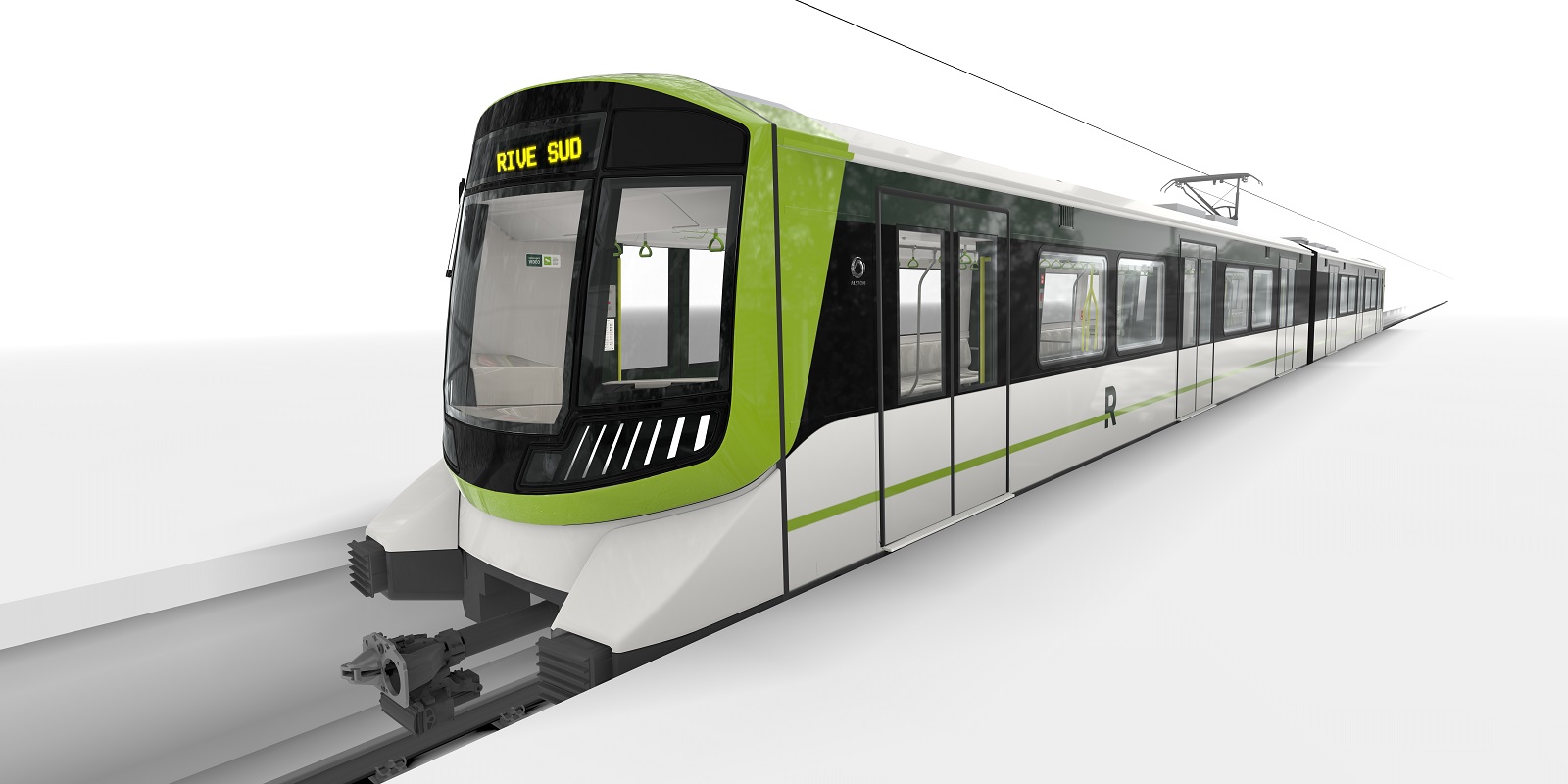
The official REM site is claiming their trains are about 80 meters in length with 4 cars. They're also claiming they can hit frequencies of 1min30sec (90secs). You're data suggests that if OL achieves something similar, it still won't be enough capacity wise?

 
For a variety of reasons, I'll set Line 5 aside. Water under the bridge. I accept that affluent Midtowners / Eglintonites didn't want serious densification like Downtown or North York Centre to begin with.

I'm more upset at this point that 8-9 years from the Ontario Line opening, nearly a decade away, everyone seems powerless to extend the station box/roughed-in platform. They're expecting nearly the same amount of boardings over 15.6 km as Line 2 currently gets over 26.2 km, and yet the trains will be 80 m long instead of 138 m. It's very possible they'd have to run 90 second headways on opening day... just to come close to the same load factor as Line 2 with 140 second peak headways (current peak headways).

This is a very rough calculation, since T1s don't have open gangways, but are slightly wider than 3 m wide OL trains. Assuming 400,000 demand for both lines (388,000 - 400,000 Ontario Line predicted boardings, vs. 403,000 Line 2 boardings from 2023-2024).

Case
Capacity supplied​
Demand density vs. 26.2 km line​
Capacity relative to demand density
80 m @ 90 s over 15.6 km / 400k
90.2%​
167.9%​
53.7%
100 m @ 90 s over 15.6 km / 400k
112.7%​
167.9%​
67.1%
138 m @ 140 s over 26.2 km / 400k
100%​
100%​
100% baseline


If we assume 400,000 boardings for Ontario Line, and 661,000 for Line 2 by 2041, after SSE is open (26.2+7.8 km):

Case
Capacity relative to demand density
80 m @ 90 s over 15.6 km / 400k
68.4%
100 m @ 90 s over 15.6 km / 400k
85.4%
138 m @ 140 s over 34 km / 661k
100% baseline

The Ontario Line would be the second true downtown line...

Who thought it would be okay for the Ontario Line to provide less capacity relative to ridership density than Line 2?
The Ontario Line platforms are built to be 100m long. The ultimate capacity for it with 100m trains with 90s headways is 30k p/h/d. What we need is a second line to increase coverage and spread demand. Also note that this line will connect to other lines (including GO Expansion) in 4 6 locations. That makes me think it will spread demand and turnover, which allows for lower capacity as people will spend less time/distance on the trains.
 
The official REM site is claiming their trains are about 80 meters in length with 4 cars. They're also claiming they can hit frequencies of 1min30sec (90secs). You're data suggests that if OL achieves something similar, it still won't be enough capacity wise?


The REM is not a good comparison at all. Even if they'll both run driverless trains with PSDs.

Montreal is a much smaller city/metro area. More to the point, the REM is more of a suburban/express/regional metro. It also has 3 distinct western branches which limits the loads going into downtown. The REM moves people farther than from Vaughan Metropolitan Centre and High Tech to Union, in less time. Such that it's time competitive with driving at all times of day.

Whatever you call it, the REM is not a 15.6 km, 15 stop local metro. Also, the Ontario Line will have higher capacity than the REM, it has fully walk-through trains that are slightly wider (2.94 vs 3.00), and longer (76 vs. 80 to 100 m).

The Ontario Line platforms are built to be 100m long. The ultimate capacity for it with 100m trains with 90s headways is 30k p/h/d.
You two are missing my point, I already accounted for 100 m trains and 90 second headways in my previous post. I also didn't decrease Line 2 headways from their current peak of 140 seconds (137 to 140 seconds from current service summary), even though ATC would allow shorter headways by 2041.

The Line 2 trains will be 3.137 m wide, with open gangways as well, so the true difference will likely be higher i.e. the Ontario Line trains could be more full / overloaded than these numbers suggest:

CaseCapacity relative to demand density
80 m @ 90 seconds over 15.6 km / 400k68.4%
100 m @ 90 seconds over 15.6 km / 400k85.4%
138 m @ 140 seconds over 34 km / 661k100% baseline
Note, "Capacity relative to demand density" means "How much peak capacity is provided relative to ridership per km".

You invert that and get this:
Case
Relative crowding index​
138 m @ 140 s over 34 km / 661k
100
100 m @ 90 s over 15.6 km / 400k
117
80 m @ 90 s "
146

The Ontario Line will likely be more crowded than Line 2, even with 90 second headways.
 
Last edited:
The Ontario Line platforms are built to be 100m long. The ultimate capacity for it with 100m trains with 90s headways is 30k p/h/d.
If the platforms, walkways, and escalators are as lacking in the Ontario line stations as they are on Line 5, they won't be achieving 30K. :)

It is concerning that the north-south line into downtown has already had a demand exceeding 30K, but can ultimately be upgraded to 40+K ... But here we are in 2026 building the first east-west line through downtown, and suddenly we can build platforms that have an ultimate length of 100 metres instead of the current 150 metres, with even narrow trains.

On the other hand, it still a bigger capacity that you see on many lines in London. And they've really screwed up with a lack of capacity that much, then they'll have to build some kind of relief line somewhere ... :)
 
If the platforms, walkways, and escalators are as lacking
PSDs go a long way to increasing the effective capacity of a platform. Crush loads on the platforms will not risk pushing people onto the tracks. People will be more comfortable leaning on the PSDs than standing on the edge. I hope that can help the Ontario Line. However, I suspect the platforms, walkways, and escalators won't be the problem, but overcrowded trains.

Then again, AI might take over downtown jobs by 203x-2041.
 
Last edited:
That makes me think it will spread demand and turnover, which allows for lower capacity as people will spend less time/distance on the trains.
You have not given any genuine consideration for how that's supposed to work... Have either of you considered how morning rush hour works with transit?

The whole point of the line, is to have Line 5, Line 2, Stouffville, and Lakeshore East lines feed the Ontario Line from the east, so as to relieve Line 1 and Union Station. It would also draw from the 501, 503, 504, and 506 streetcars by bringing those riders downtown quicker. All of that westbound.

Virtually all of what I've mentioned feeds the Ontario Line in ONE direction. And mostly towards Queen and Osgoode.

1779015465060.png


From Steve Munro, who rightfully questions the demand projections, so take it with a grain of salt.
That is not to say the demand projections support your case @NoahB , if anything, it's the opposite.

1779016183942.png


Also @nfitz :
1779016385476.png
 

Attachments

  • 1779015735116.png
    1779015735116.png
    925.6 KB · Views: 0
Last edited:
Ontario Line should start service using 5 car 100 metre train sets. To have flexibility to not have to start with 90 second frequencies since that’s a juggling act especially with longer time dwell stations like the interchanges. Unless they plan to have the doors abruptly cut people off.
 
Eastern bridge update:
DJI_20260516112456_0022_D.jpg

DJI_20260516112456_0022_D crop.jpg

DJI_20260516113237_0031_D.jpg


Dundas (and Logan) bridge. You can see catenary pole foundations in the centre of the OL side of the corridor. They are usually paired with a pylon. Tracks have been laid for GOs 3rd tracks down to just South of Dundas.
DJI_20260516115930_0040_D.jpg


Logan (and Dundas) bridge
DJI_20260516120222_0044_D.jpg


From Gerrard & Carlaw
DJI_20260516121034_0052_D.jpg


Moss Park. They've started putting up forms on the West side of the station for a level above the tracks.
Looking East:
DJI_20260516123907_0065_D.jpg


Looking West:
DJI_20260516124816_0084_D-2.jpg
 

Back
Top