


News   GLOBAL  |  Apr 02, 2020
 11K     0 
News   GLOBAL  |  Apr 01, 2020
 43K     0 
News   GLOBAL  |  Apr 01, 2020
 6.9K     0 
Electrification is not a no brainer, quickly accomplished in lots of other places. Look at how it is only recently that the MBTA has started to take Providence Line electrification seriously, despite the fact that almost the entire corridor is under wire and has been for a long time (Amtrak’s wire admittedly).
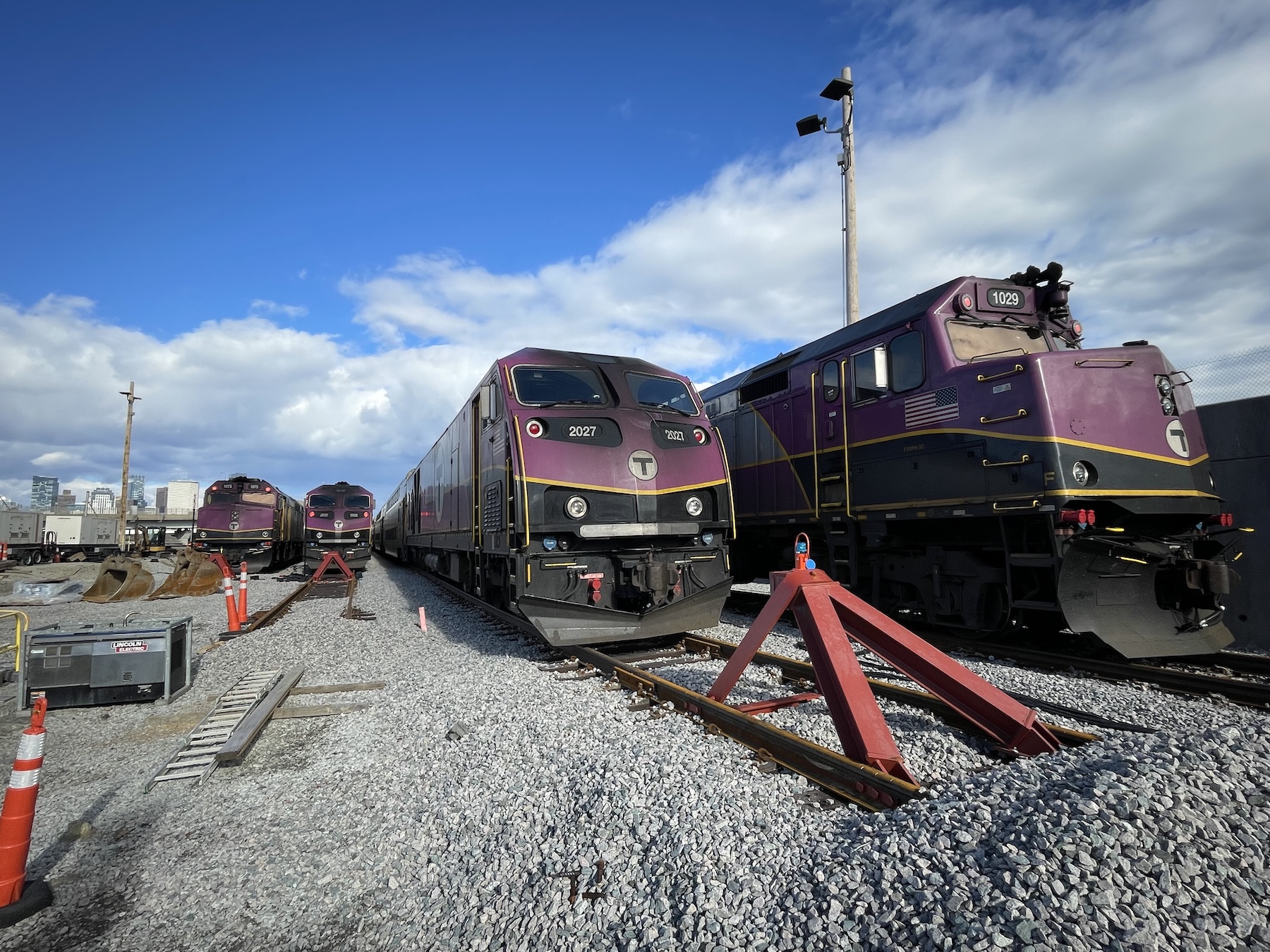
In fairness to this situation.....

Amtrak is not the easiest landlord to deal with. The MBTA has long wanted to run electric trains, but Amtrak's fees and requirements for it have been nothing short of insane, and so until very, very recently it has been cheaper for the T to run diesels under the wire.

This is not the same as what we are dealing with here.

Dan
 
I'll be getting news of full electrification through a Neuralink implant in a retirement home, if ever.
So?

What matters most is not when we complete electrification of the entire network (or even the publicly-owned portion of the network), what matters is when some electric trains start running somewhere. Because that's when we can stop buying new diesel trains and gradually move our existing fleet onto the longer-distance express services (which also share freight tracks on the outer portions of some routes). The biggest benefits of electrification are for the services with the highest frequencies and shortest stop spacing, which are first on the list for electrification (LSE local, LSW local, and UP Express)
 
So?

What matters most is not when we complete electrification of the entire network (or even the publicly-owned portion of the network), what matters is when some electric trains start running somewhere. Because that's when we can stop buying new diesel trains and gradually move our existing fleet onto the longer-distance express services (which also share freight tracks on the outer portions of some routes). The biggest benefits of electrification are for the services with the highest frequencies and shortest stop spacing, which are first on the list for electrification (LSE local, LSW local, and UP Express)
I was thinking 2040 to 2050 for the core ~260 km GO Expansion. So 15 to 25 years from today.

30 to 50 years from today for the tracks to be in their final "position" is crazy to think about. Meanwhile Sydney and Melbourne have had electrified regional rail for half a century easily. You would think technological advancements would've made GO's catch-up faster than Sydney and Melbourne's network growth from the 1920s to the 1970s. 0 to ~300 route km.

That's 2056 to 2076 to come close to the level of service that Sydney and Melbourne 𝖺̶𝗅̶𝗋̶𝖾̶𝖺̶𝖽̶𝗒̶ ̶𝗁̶𝖺̶𝗏̶𝖾̶ ̶𝗍̶𝗈̶𝖽̶𝖺̶𝗒̶ already had 30 years ago. This sort of prediction is highly disheartening. We're 60 years behind.

A reminder that Greater Sydney and Melbourne are less populous and less dense than the GTHA. GTHA population exceeded Greater Melbourne by the 1950s and Greater Sydney by the 1960s (at the latest; by some counts, Toronto's been bigger than Melbourne for over 100 years).

The longest headways for Sydney Trains are 30 minutes on 6 of 9 lines, all day long. The other 3 have shorter headways. This would be better or similar to the shortest midday headway on 5 out of 7 GO train lines
 
Last edited:
So?

What matters most is not when we complete electrification of the entire network (or even the publicly-owned portion of the network), what matters is when some electric trains start running somewhere. Because that's when we can stop buying new diesel trains and gradually move our existing fleet onto the longer-distance express services (which also share freight tracks on the outer portions of some routes). The biggest benefits of electrification are for the services with the highest frequencies and shortest stop spacing, which are first on the list for electrification (LSE local, LSW local, and UP Express)
I'm aware this is a slight deviation and entering into the realm of wishcasting, but the worst part for me is not electrification, per se, it's what it represents. If this project, namely putting up catenary wires and substations take decades, it really pains me to think of literally any other project in this country. I'm aware i'm going to get, "Catenary's not that simple", but no engineering project is, and in the realm of engineering projects if "Catenary takes several decades" is the standard, some projects I can think of will take centuries.
I feel if we lost all the projects and infrastructure we inherited, we could not rebuild it in 500 years.
Sorry for the minor rant.
 
I'm aware this is a slight deviation and entering into the realm of wishcasting, but the worst part for me is not electrification, per se, it's what it represents. If this project, namely putting up catenary wires and substations take decades, it really pains me to think of literally any other project in this country. I'm aware i'm going to get, "Catenary's not that simple", but no engineering project is, and in the realm of engineering projects if "Catenary takes several decades" is the standard, some projects I can think of will take centuries.
I feel if we lost all the projects and infrastructure we inherited, we could not rebuild it in 500 years.
Sorry for the minor rant.

It's a case where both perspectives are true.

Yes, GO Expansion is taking too long to build. And, yes, electrification has to be a later stage in that build.

The wires are just the proof that the task is reaching fruition..

- Paul
 
I feel if we lost all the projects and infrastructure we inherited, we could not rebuild it in 500 years.
And yet there are people on Urban Toronto who would almost say that the Greeks invented railways 2600 years ago, that electrified rail was invented 100 years ago, and therefore electrification from scratch should take 2500 years. If we lost all the infrastructure we inherited, it should take 2500 years...

Anything but admit GO's plight is unique, whereas its purported goals are not unique. Certainly not unique if Eurasia is looked at. Not even unique in the Anglosphere as I've mentioned Sydney and Melbourne already. It seems the more "developed" a country is, the more difficult it is to build infrastructure that is a relative cakewalk in the developing world. Austerity and incompetence.

Last, but not least. GO trains on Lakeshore West were actually faster in 1967 than they are today. Been sitting on that for a while, will make a longer post later.

For example: Eastbound trains from Burlington stopped another 7 times including Union, travel time was 51 minutes in 1967. Conversely, the current express stops only 5 times after Burlington, and takes 52 minutes to reach Union. To make matters worse, the Burlington GO from 1967 was around half a mile west of the current station, meaning the 1967 train travelled longer, had 2 more stops, and was still 1 minute faster...

GO has literally gone backwards in the last 60 years.

 
I was thinking 2040 to 2050 for the core ~260 km GO Expansion. So 15 to 25 years from today.

30 to 50 years from today for the tracks to be in their final "position" is crazy to think about. Meanwhile Sydney and Melbourne have had electrified regional rail for half a century easily. You would think technological advancements would've made GO's catch-up faster than Sydney and Melbourne's network growth from the 1920s to the 1970s. 0 to ~300 route km.

That's 2056 to 2076 to come close to the level of service that Sydney and Melbourne 𝖺̶𝗅̶𝗋̶𝖾̶𝖺̶𝖽̶𝗒̶ ̶𝗁̶𝖺̶𝗏̶𝖾̶ ̶𝗍̶𝗈̶𝖽̶𝖺̶𝗒̶ already had 30 years ago. This sort of prediction is highly disheartening. We're 60 years behind.

A reminder that Greater Sydney and Melbourne are less populous and less dense than the GTHA. GTHA population exceeded Greater Melbourne by the 1950s and Greater Sydney by the 1960s (at the latest; by some counts, Toronto's been bigger than Melbourne for over 100 years).

The longest headways for Sydney Trains are 30 minutes on 6 of 9 lines, all day long. The other 3 have shorter headways. This would be better or similar to the shortest midday headway on 5 out of 7 GO train lines
To be clear, I'm not saying that the Province of Ontario's pace of electrification is acceptable. It is clearly outrageously slow.

My point is simply that the pace I'm concerned about is not when we complete the 260th kilometre, but rather:
1. When the first electrified segment starts operating in regular service, and
2. How many kilometres per year get electrified after that.

The problem of treating electrification as an individual task with an individual completion date is that it encourages the megaproject mentality that contributes to Metrolinx's inability to deliver anything with a reasonable timeline or a reasonable budget. Rather than treating it as one enormous task, it is much more effective for Metrolinx / ON Express to establish it as a program, build an internal team for electrification and set up effectively an assembly line where electrification steadily expands across the network. That steady pace enables continuous work for the various disciplines involved, from planning to final installation, eliminating the costs of ramping up and down.
 
The sidewalk observers here at UT also need to remember that stringing the wires themselves is just the tip of the iceberg.
The prerequisite and time sensitive part is the underlying infra - tie ins to Hydro One supply, feeders, switchgear, SCADA, control centre.
For that matter, the wires are dependent on early works - bridge clearances, grounding, physical and visual barriers, etc.
Not the least of that is a strategy for an initial entry route thru the USRC.
Selecting and procuring railcars and/or locomotives is not even the longest lead time in that.
We know nothing about how far along any of this work may be. Certainly by this point one would expect 95% design completion, and probably some procurement of components may already be time sensitive.
I would be a whole lot happier if ML revealed that some of this work is already in the can. One sees lots of individual bits of futureproofing, but is there a comprehensive checklist or gantt chart with all the items for that first corridor ?
The timeframe for that first line needs to be monitored for slippage, even if the wires won't happen for a decade or more.

- Paul
 
The sidewalk observers here at UT also need to remember that stringing the wires themselves is just the tip of the iceberg.
The prerequisite and time sensitive part is the underlying infra - tie ins to Hydro One supply, feeders, switchgear, SCADA, control centre.
For that matter, the wires are dependent on early works - bridge clearances, grounding, physical and visual barriers, etc.
Not the least of that is a strategy for an initial entry route thru the USRC.
Selecting and procuring railcars and/or locomotives is not even the longest lead time in that.
We know nothing about how far along any of this work may be. Certainly by this point one would expect 95% design completion, and probably some procurement of components may already be time sensitive.
I would be a whole lot happier if ML revealed that some of this work is already in the can. One sees lots of individual bits of futureproofing, but is there a comprehensive checklist or gantt chart with all the items for that first corridor ?
The timeframe for that first line needs to be monitored for slippage, even if the wires won't happen for a decade or more.

- Paul

I have don't doubt that some electrification will be done by 2040-2050. My concern in the last few posts is:
2. How many kilometres per year get electrified after that.

Since:
only a small proportion of tracks are already in the exact position where they are expected to be in 30-50 years’ time

Grade separations are another big question.

E.g. Kerr Street is in limbo: https://www.oakville.ca/transportat...es-storm-sewers/kerr-street-grade-separation/


The Level Crossing Removal Project (LXRP) is an Australian infrastructure upgrade project by the State Government of Victoria to remove and grade-separate 110 level crossings and to rebuild 51 stations on the metropolitan and regional rail transport network of the state capital Melbourne.


After pledging the removal of 50 level crossings at the 2014 Victorian state election, the Andrews Government committed $2.4 billion in the 2015–2016 budget to remove the first 20 crossings by 2018.


As of May 2026, 91 crossings have been removed and 49 train stations have been built or rebuilt as part of the project.


As a starting point, a decision was made to only consider crossing locations that were identified as medium or high priority and featured a projected EI of 200,000 or greater in 2031. This reduced the number of locations under consideration from 185 to 115.
1780404492713.png


Forget 91 crossings, I strongly suspect Metrolinx won't even separate 38 crossings by 2050.
 
I don't have time to go too far down the rabbit hole this morning, but somewhere is a ML report prioritising grade separations from their perspective.
Naturally that will be out of date given that service plans are evolving, but it's a stake in the sand at least.

- Paul
 
I don't have time to go too far down the rabbit hole this morning, but somewhere is a ML report prioritising grade separations from their perspective.
Naturally that will be out of date given that service plans are evolving, but it's a stake in the sand at least.

- Paul
I believe I've linked it above, it's out of date since it's from 2017 though.
 
As usual, discussion has emerged in two threads at once. I won't crosspost from the GO service thread, but I will note that if the Milton Line in particular shifts from being a peak service line to a 2WAD project, the criticality ratings of several grade crossings on that route will leap upwards based on increase in train frequency, considering that these are some of the most heavy road traffic volumes in the GTA, and considering the criticality of these crossings to the community (eg fire stations just up the road)

- Paul
 

Back
Top