




fungus_eater
New Member
TTC is playing too safe with the signalling systems and transit priority. They should give operators more freedom to navigate through intersections so the line can go faster.
|
|
|
 nowtoronto.com

What would you suggest they should do in terms of TSP? Conditional in some corridors and unconditional in some? Completely conditional? Completely unconditional?‘It will be so much better,’ Toronto Mayor Olivia Chow says Finch West LRT should be faster by the end of the winter - NOW Toronto
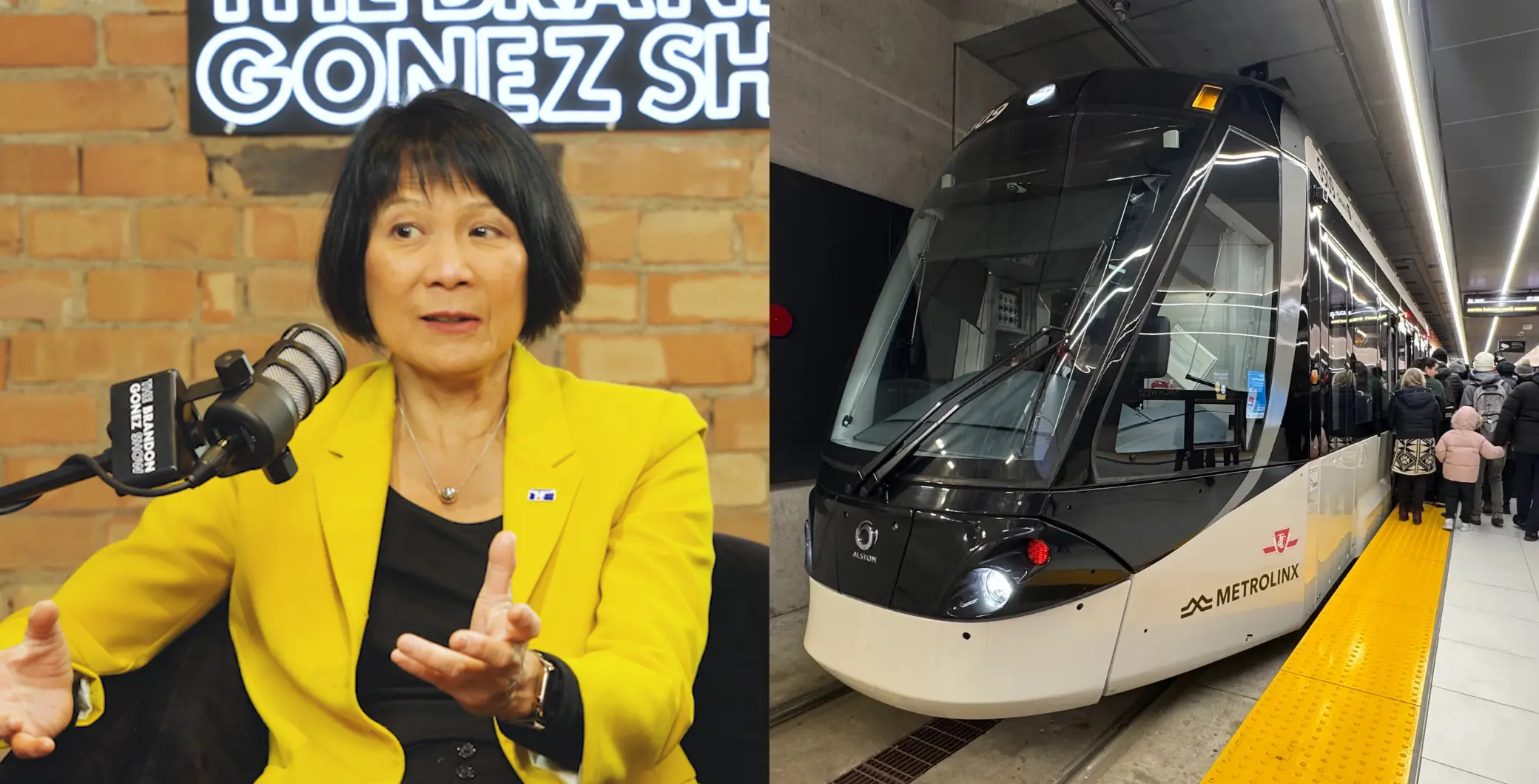
Mayor Olivia Chow says the Finch West LRT could become faster by the end of the winter, as she pushes for transit signal priority.
"“When the train gets to a traffic signal, they should have priority. In the past, they didn’t because what Metrolinx had was a system that is conditional priority. They need to have much higher priority because there’s like three or four cars making left turns, and it blocks a train that has 40, 50, 80, 100 people in it. There’s no reason to do that,” she said. "
Looks like Chow wants priority over car turning left. If this one change goes through I imagine the line could get closer to 30 minutes. If all the changes go through (aggressive TSP, raised speed limit) would we be able to get less than 30?
How about at least getting trains up to 50kmph?‘It will be so much better,’ Toronto Mayor Olivia Chow says Finch West LRT should be faster by the end of the winter - NOW Toronto
Mayor Olivia Chow says the Finch West LRT could become faster by the end of the winter, as she pushes for transit signal priority.
"“When the train gets to a traffic signal, they should have priority. In the past, they didn’t because what Metrolinx had was a system that is conditional priority. They need to have much higher priority because there’s like three or four cars making left turns, and it blocks a train that has 40, 50, 80, 100 people in it. There’s no reason to do that,” she said. "
Looks like Chow wants priority over car turning left. If this one change goes through I imagine the line could get closer to 30 minutes. If all the changes go through (aggressive TSP, raised speed limit) would we be able to get less than 30?

The way things are written, as I understand it, the City has no unilateral path to improving things on the line, save for signal priority at intersections. (They can modify their own equipment to change the settings, not the equipment installed on the line itself to be clear.)The way you wrote this, it seems as though the case is shut. Does the city/Metrolinx have any path to improving service at all?
I was in Laval recently, and they seem to have a very advanced and complex priority chain for signals. Not sure how a medium sized suburb can do it and we cannot.What would you suggest they should do in terms of TSP? Conditional in some corridors and unconditional in some? Completely conditional? Completely unconditional?
And in fairness I have not laid eyes on the contract itself, so I don't know if there are clauses for things such as system performance (beyond availability and downtime). I'm not particularly optimistic that there are, to be truthful.

The logs Steve has posted show an amazing lack of either training, supervision or management.Some delay logs made their way to Steve Munroe, up on his site.
Makes the point on how these should have been caught earlier on, perhaps indicating gaps in testing or operator training.
Unsure how this compares to other line openings or how 'typical' this is of an opening week. It would be interesting to see how line 5 compares should those logs find their way over to Steve (as I'm sure they might)...
The headline says "it WILL be much better". The quote in the article "it COULD be much better" --- a crucial difference.‘It will be so much better,’ Toronto Mayor Olivia Chow says Finch West LRT should be faster by the end of the winter - NOW Toronto
Mayor Olivia Chow says the Finch West LRT could become faster by the end of the winter, as she pushes for transit signal priority.
"“When the train gets to a traffic signal, they should have priority. In the past, they didn’t because what Metrolinx had was a system that is conditional priority. They need to have much higher priority because there’s like three or four cars making left turns, and it blocks a train that has 40, 50, 80, 100 people in it. There’s no reason to do that,” she said. "
[…]

How about at least getting trains up to 50kmph?

The City lowers posted speed limits because genuine traffic calming is way more expensive. It requires road reconstruction and major physical design changes.I'm starting to wonder whether this City has developed a fetish for all vehicular traffic moving slowly. I mean cars are limited to 30km/h on roads that used to be 60km/h. I think the same fetish has now spread to public transit!
This isn't far from the truth. The TTC dramatically lowered the speeds on the new Harbourfront 509 layout, because there were some close calls with tourists wandering onto the tracks. Their solution was to slow down the streetcars to a glacial pace.I'm starting to wonder whether this City has developed a fetish for all vehicular traffic moving slowly. I mean cars are limited to 30km/h on roads that used to be 60km/h. I think the same fetish has now spread to public transit!