News   GLOBAL  |  Apr 02, 2020
 11K     0 
News   GLOBAL  |  Apr 01, 2020
 43K     0 
News   GLOBAL  |  Apr 01, 2020
 6.9K     0 
Removing Garneau would have been absurd.

I'm surprised that the Bonnie Doon, Strathearn, Hollyrood stretch of the Valley Line wasn't identified as a priority area as well...
It was actually just one specific avenue in Garneau. Bonnie Doon is definitely a good contender IMO, big lots with run-down houses on top.
 

1748625579341.png


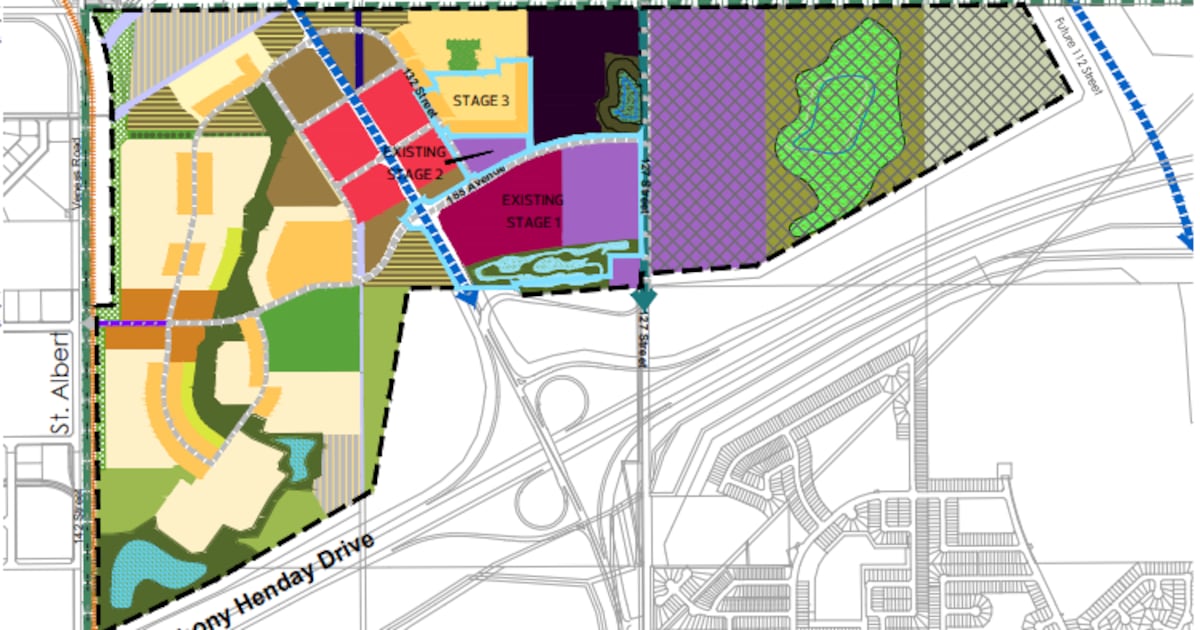
Was there a enacted policy that was supposed to limit new areas like this until currently approved greenfield areas have reached a certain level of completion? Hasn't seemed to prohibit further growth with new areas like this and Marquis (Northeast).
 
Not really wrong though, unless you bought a 'starter' home outside of Toronto and the 905 in 2019 and sold it 5 years later in 2024...

In Edmonton, there's a good chance you might make a little bit if you bought something for cheap and resold over the same timeframe, but if it was a condo, no chance.
 
It's real estate, you win some, you lose some.

My condo went up 100% in 5-6yrs and then gracefully declined, it happens.

He bought in a 'up and coming' neighbourhood at likely one of the peaks and so it is.

Any investment is inherently a risk and while the condo market is abysmal right now, it will come back as the delta grows between it and SFH/duplexs etc. and as we make central areas more livable and safe again.

Condos will be a good option for some when avg. housing becomes unreachable and rents are $3.50 a foot.
 
Not to call BS on part of a key part of this story, but in what world would a balanced TFSA earn enough to buy a house unless somebody won a day-trading lottery?
The simple answer: it doesn't, even with maxed out contributions at a fairly exceptional 10% avg return. Moreover, the problem with 'opportunity cost' buy vs rent what-if scenarios is that TFSA maximums aside, he wasn't going to be investing the dollar difference between owning vs renting a comparable space. It's really just a nice thought experiment.

The real opportunity cost is if you're dissuaded from pursuing opportunities/experiences/education elsewhere due to being anchored by your mortgaged home. Which I guess is still sort of his point.
 
It's real estate, you win some, you lose some.

My condo went up 100% in 5-6yrs and then gracefully declined, it happens.

He bought in a 'up and coming' neighbourhood at likely one of the peaks and so it is.

Any investment is inherently a risk and while the condo market is abysmal right now, it will come back as the delta grows between it and SFH/duplexs etc. and as we make central areas more livable and safe again.

Condos will be a good option for some when avg. housing becomes unreachable and rents are $3.50 a foot.
I paid 140k for a condo a couple months back. Great location, super old building.

I currently pay less for my mortgage + condo fees + utilities than I did while renting. I invest the surplus primarily in XEQT for broad market exposure. I have no expectation of selling the unit for more than I paid, since condos are depreciating assets.

I think the issue I take with this guy's perspective is that he doesn't present it as "I overpaid for a condo and was surprised when it went down in value", but rather that renting is more financially sensible than buying. The math shakes out differently for everyone, and there is no "best" way to pay for the place you live.

 
Our condo fees are pretty damn high but I absolutely love the location (literally across two streets from the river valley), the views (Walterdale bridge and the Leg), the incredible (1970s) layout with an actual window in the giant kitchen, and the neighbours (our building hosts a weekly friday happy hour that's fabulous). We briefly considered getting a house but for a similar location it would have been a whole series of pretty big compromises and between the high property taxes and utility costs we'd have ended up with a monthly amount substantially higher than we pay now. I know, I made a spreadsheet haha.

We didn't buy this as an investment but as a home, and maybe that's the problem. We continue to think of real estate as an investment and it used to be, but isn't as much anymore. And it's also more than that. I have moved so many times in the last two decades, this is where I want to grow old, so I honestly don't care all that much if it won't make me rich in the end.
 
I paid 140k for a condo a couple months back. Great location, super old building.

I currently pay less for my mortgage + condo fees + utilities than I did while renting. I invest the surplus primarily in XEQT for broad market exposure. I have no expectation of selling the unit for more than I paid, since condos are depreciating assets.

I think the issue I take with this guy's perspective is that he doesn't present it as "I overpaid for a condo and was surprised when it went down in value", but rather that renting is more financially sensible than buying. The math shakes out differently for everyone, and there is no "best" way to pay for the place you live.
In the long run real estate values generally go up even here, although the last decade or so in Edmonton has not been very kind, particularly to condos.

However, lest we forget there were also decades when investing in the market did not produce great returns either. With anything, if you buy at the peak, it will take longer for the value to recover or go up.

Although I do agree we shouldn't look at real estate so much for price appreciation, but what works personally and cost wise. If you can pay less to own than rent, then that is clearly a good deal.
 

Back
Top