Glenco
Senior Member
Admittedly a bit of brick would have been nice but these windows aren't small and the patio doors are really nice not your usual cheap sliders

The design looks quite similar to the buildings next door that I think were built circa 2020ish (photo from streetview).Admittedly a bit of brick would have been nice but these windows aren't small and the patio doors are really nice not your usual cheap sliders
View attachment 691200


Ain't that the truth!sure nice seeing something built above six stories.

The blocks in Poland where my grandparents lived looked about a thousand years old within a couple years of being built. Fast forward past the fall of communism, and they had been painted, maintained, and looked lovely. It made all the difference.I've actually been inside some true commie blocks (Romania), and honestly, they're actually fairly well built with good floorplans. Many have been well maintained and have been extensively renovated to modern standards inside and out.

One of the more, ummm, interesting complaints about new buildings is that they are “too boxy”–as if their form is somehow foreign and boxy buildings are nonexistent in the history of the city. I find this complaint interesting because the urban morphology of this city, as with most other cities, is rooted in box-shaped buildings. The sad reality is that we don’t have enough dumb boxes today. Our present land use code makes dumb boxes illegal to build in most of the city. The singular exception to that is in single-family zones and the lowest of the lowrise zones , which is where we see these types of forms most often.
I say this is a sad reality because “dumb boxes” are the least expensive, the least carbon intensive, the most resilient, and have some of the lowest operational costs compared to a more varied and intensive massing. Given the housing and climate crises we presently face , it would behoove us to move towards legalizing dumb boxes in more of the city.
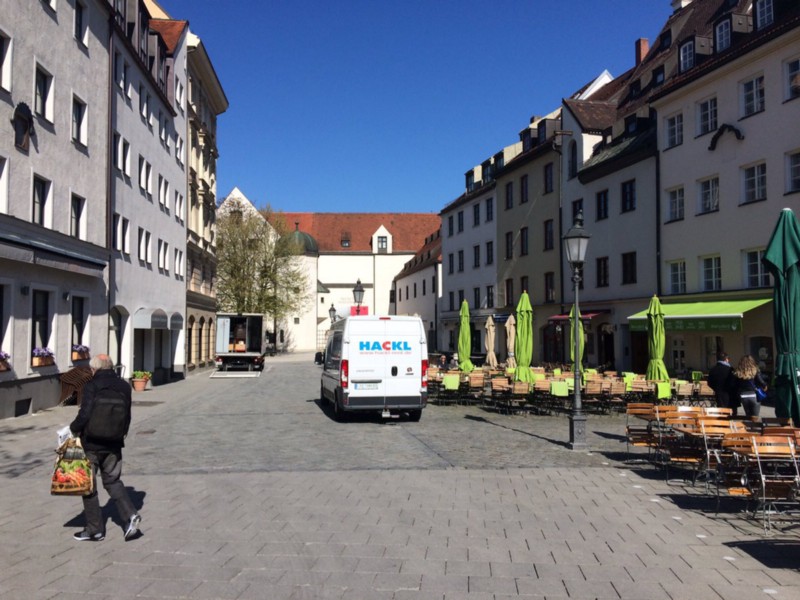
Before the zoning ordinance was passed in 1923, the restrictions on building form were few and far between. In looking at the pre-zoning buildings in my block –the vast majority of them are simple boxes. The facade isn’t modulated, there aren’t awkward recesses , and these buildings weren’t encumbered with useless setback requirements. Of course, it makes sense that builders built in this manner , it was the most cost-effective and allowed the builder to make flourishes on the street-side facade if desired or budget allowed. It’s also important to point out what else these buildings didn’t have to comply with: classist density limits, SEPA, reduced lot coverage limits, parking requirements, and modulation.
 www.theurbanist.org
Square boxes are fine if there's an adequate amount of ornamentation. I'm not sure of the history of it, but we have substituted ornamentation for massing and material choices. Most cities don't even have the skilled trades needed for ornamentation now, even if architects wanted to do it.
I seem to recall reading a theory that this seems to coincide with the expectation of detailed 3d renders in the rezoning stage, and with the process often requiring a dozen iterations, design started to focus more on easily identifiable changes like massing and materials. Its also a lot easier to change the massing than it is to redesign ornamentation a dozen times over, especially when it may not end up in the next iteration before rezoning approval, let alone the final product. And now the importance of massing and materials is so entrenched in the design process, that ornamentation isn't something that many architects are pushing for, let alone something developers or urban design panels are asking for.
Actually, with 3-d printing and CNC cutting, shaping, and drilling we have bypassed the need for skilled tradespeople in the realm of ornamentation in architecture. Almost any level of ornamentation is now achievable which as @constance_chlore has researched has both positive and negative outcome-potential. We are seeing the negative in these 6-storey agglomerations that are rising offensive to the name of Piet Mondrian.Most cities don't even have the skilled trades needed for ornamentation now, even if architects wanted to do it.
I don't have your experience in architecture and development, but I would have to imagine that these sorts of patchwork façades must be successful in part for economic reasons, right? Like, even if we can use factory-produced cast stone rather than hiring a stone carver, I'd imagine it's more expensive to design, install, and maintain compared to interchangeable panels?Actually, with 3-d printing and CNC cutting, shaping, and drilling we have bypassed the need for skilled tradespeople in the realm of ornamentation in architecture. Almost any level of ornamentation is now achievable which as @constance_chlore has researched has both positive and negative outcome-potential. We are seeing the negative in these 6-storey agglomerations that are rising offensive to the name of Piet Mondrian.

 Otherwise pretty cool!