Coming to Council next week:
https://secure.toronto.ca/council/agenda-item.do?item=2026.MM42.37
MM42.37 - Revitalizing Toronto’s Peace Garden - by Councillor Rachel Chernos Lin, seconded by Mayor Olivia Chow
Notice of Motion
Consideration Type: ACTIONWard: 15 - Don Valley West
Attention
* Notice of this Motion has been given.
* This Motion is subject to referral to the Economic and Community Development Committee. A two-thirds vote is required to waive referral.
Recommendations
Councillor Rachel Chernos Lin, seconded by Mayor Olivia Chow, recommends that:
1. City Council direct the General Manager and Executive Director, Economic Development and Culture and the City Clerk, to develop and implement a plan to enhance the upkeep of the Peace Garden, such plan to include:
a. repair and maintenance of the space, including maintenance of the mechanism supporting the eternal flame and of the existing plaques and signage on the site; and
b. improved wayfinding directing visitors to the Peace Garden.
2. City Council request the General Manager and Executive Director, Economic Development and Culture and the City Clerk, in partnership with relevant divisions, undertake public and stakeholder consultation to develop a plan to revitalize the Peace Garden and increase public awareness about its historical significance, purpose and meaning through actions including, but not limited to, physical improvements to the garden and integration with surrounding public spaces including the Spirit Garden, such consultation to include outreach to Indigenous communities, community leaders and faith leaders, and report back to City Council with a recommended approach by the second quarter of 2027.
3. City Council request the Chief Communications Officer and City Clerk review and update the description of the Peace Garden on the City of Toronto’s website to include more information on its historical significance and meaning.
4. City Council request the City Clerk incorporate the Peace Garden into civic education programming and tours of City Hall.
Summary
Toronto’s Peace Garden was originally established in 1984, as a physical expression of the City’s commitment to peace, and opposition to nuclear warfare. The symbolism of the garden is informed by the context of its creation at the height of the Cold War. The garden’s gazebo represents community and civilization, the vulnerability of which is manifested in its incomplete roof. Central to the garden is the eternal flame, kindled in Hiroshima, which is surrounded by waters from Nagasaki – serving as a memorial, and a message to future generations about the need for ongoing work and commitment to build and maintain peace among each other, and across the world.
The creation of this space was highly consequential. Then-Prime Minister Pierre Trudeau attended the site on March 5th, 1984, to turn the first sod on the project on the City’s 150th anniversary. The eternal flame was lit later that year by Pope John Paul II, who also poured waters from Nagasaki into the garden’s pool. Queen Elizabeth II visited the site in October 1984 to formally dedicate the Peace Garden as an expression of Torontonian’s commitment to peace.
Today, more than 40 years later, the message of the Peace Garden resonates as strongly as at the time of its creation. As conflicts around the world drive increasing hate and division in our own City, it is imperative that Toronto renew its commitment to lasting peace at home and abroad.
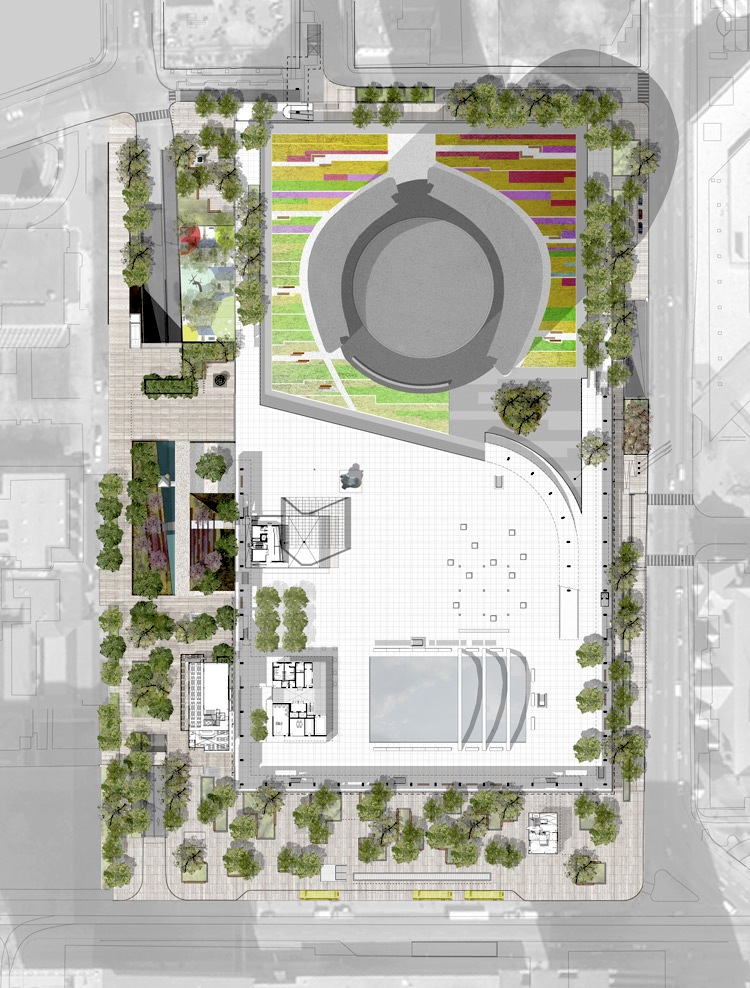
While our commitment to its principles remains strong, engaged community members and advocates for peace have raised concerns about the present condition of Peace Garden. In 2010, the garden was moved from its previous location at the heart of Nathan Phillips Square to its present location at the west side of the square. Concerns have been raised about the maintenance of the site, and about the lack of public awareness about the garden and its message. There is a consensus that its current state does not reflect the importance of its message and meaning to our City.
Improving the maintenance of the garden and establishing a plan for its future at Nathan Phillips Square is one way for the City to advance and renew its commitment to peace.