smallspy
Senior Member
Because they didn't abandon planning above-ground alignments. It's was, and still is, specific to each option and location.I've never seen a clear explanation for why the TTC completely abandoned anything except below-grade alignments starting in the 1980s.
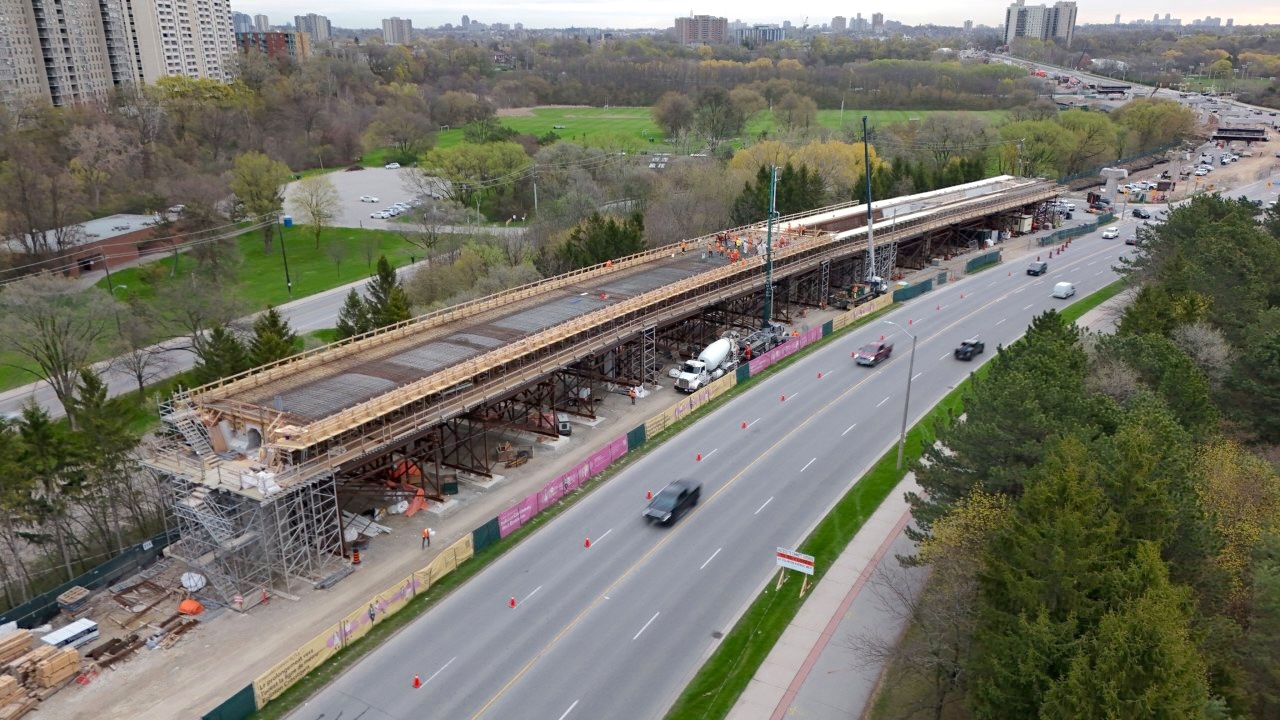
For instance, much of SRT extension was going to be above ground. Same goes with its conversion to LRT. The western extension of Sheppard was projected to be above-ground over the West Don River. Hell, it is over the East Don River at Leslie.
But it has always depended on the topography and site. The City has long held transit to be a city-building tool. If you build transit above ground there, it makes it difficult-to-impossible to build anything else on the same land. The SRT worked because it ran in a hydro corridor and along the back of industrial properties. It would have been trickier to build it along Kennedy or Midland, although not impossible.
There is nothing inherently wrong with tunnelling under the Flats, although it does make building the stations at Jane and Scarlett more complicated. I do agree that it does seem wasteful to have planned it that way, however.They sub out the elevated tracks over the Eglinton Flats, and an (admittedly optimistic) option for an elevated run up Weston for wholly tunneled alignments, even when they would be crazy expensive as is the case with tunneling under the Humber River. Around the same time period, the proposed Line 2 extension to Sherway along mostly a wide freight rail corridor is proposed as wholly tunneled despite running through wholly industrial and commercial lands, driving up costs to the point of never building the relatively easy extension.
The Sherway extension was going to depart from the CPR alignment pretty quickly, so it was going to have to need to go underground to get there.
I mean, if you're looking for correlation without causation, sure, you've gotten there.It does not feel like a coincidence that this is the same time period when subway expansion functionally died out (yes other factors were contributing to this) and I can't understand why the TTC basically threw their decades of successful alignment planning out of the window.
Subway construction was getting more expensive, absolutely. But that had already started in the 1970s, and is why the Yonge subway extension was shortened to Finch instead of the originally planned Steeles (and why it was built with fewer stations). And that's why they were looking for cheaper technologies to provide three-quarters of the service for half the price - at least if you listened to the marketing wank. But that's how we got the bag of bolts known as the ICTS, and that ended up scaring off people to more subway expansion until we absolutely had to.
The flattening of the Metro level of government, along with the general gutting of the municipalities in general during the Mike Harris era certainly did no favours, either.
Dan