




goodcitywhenfinished
Active Member
What makes toll roads so unpopular in Canada? Seems like tolls are pretty widely accepted everywhere else, even the US, more so than they are here.
|
|
|

Tolls are pretty unpopular in the US, even if they are more common. Texas has had some big state level politics about it lately as the state had been relying on tolls for most major road project fundings over the last decade and people were starting to push back now that all the projects are opening. I believe the governor recently banned new toll roads I believe.What makes toll roads so unpopular in Canada? Seems like tolls are pretty widely accepted everywhere else, even the US, more so than they are here.
Basically because the 407 exists, every mention of a toll road in ontario at least is impossible.What makes toll roads so unpopular in Canada? Seems like tolls are pretty widely accepted everywhere else, even the US, more so than they are here.
Tolls are pretty unpopular in the US, even if they are more common. Texas has had some big state level politics about it lately as the state had been relying on tolls for most major road project fundings over the last decade and people were starting to push back now that all the projects are opening. I believe the governor recently banned new toll roads I believe.
I think Canada just has very few examples to rely on. Outside of a small number of bridges, there are almost no toll roads left in Canada which are not border crossings.. and the 407 is the only big one left. As a result when Canadians think of road tolls they think of the 407 with it's $0.60/km rate plus camera charge and account fees.
Most other places realize road tolls are more like I-90 in New York, where it's a couple of cents a km with no additional charges on top.
Still - most US road tolls and tolls in general across the globe are designed to finance infrastructure, not limit demand. Urban tolling in the GTA, be it the 407 or the Gardiner Expressway, would be more intended for congestion management and that means tolls more in line with the 407 than I-90. And that is wildly unpopular.

Rental and home prices are pretty unaffordable across the entirety of the GTA. Further outside the major population centres (say travelling from Shelburne to Toronto) they're going to be paying an inordinate amount in gas every week anyhow. Low-middle class stand to benefit most from money going into transit. Reliance on over-paying for transportation is a real thing here in Canada. Owning a car in any community in the largest population zone in the country shouldn't have to be mandatory for anyone. Any change will bring short-term pain for those involved, no doubt. People need time to adjust, but fearing that has been half of the political problem here in the province. Drivers suffer anyway when we do nothing and still have to repair road damage (see the current Gardiner woes).Not to mention, tolling impacts the poorer middle class population the most, which is the demo that all political parties must at least appear to be catering too. And the problem there if course, is that people in this group cannot afford to live in a family size home with good transit connections, so, any tolling impacts them by either making their life more unaffordable, or drastically reducing any free time they have by increasing their travel time via transit. As always, this is a housing problem, and the solution is unpalatable to any of the political parties.
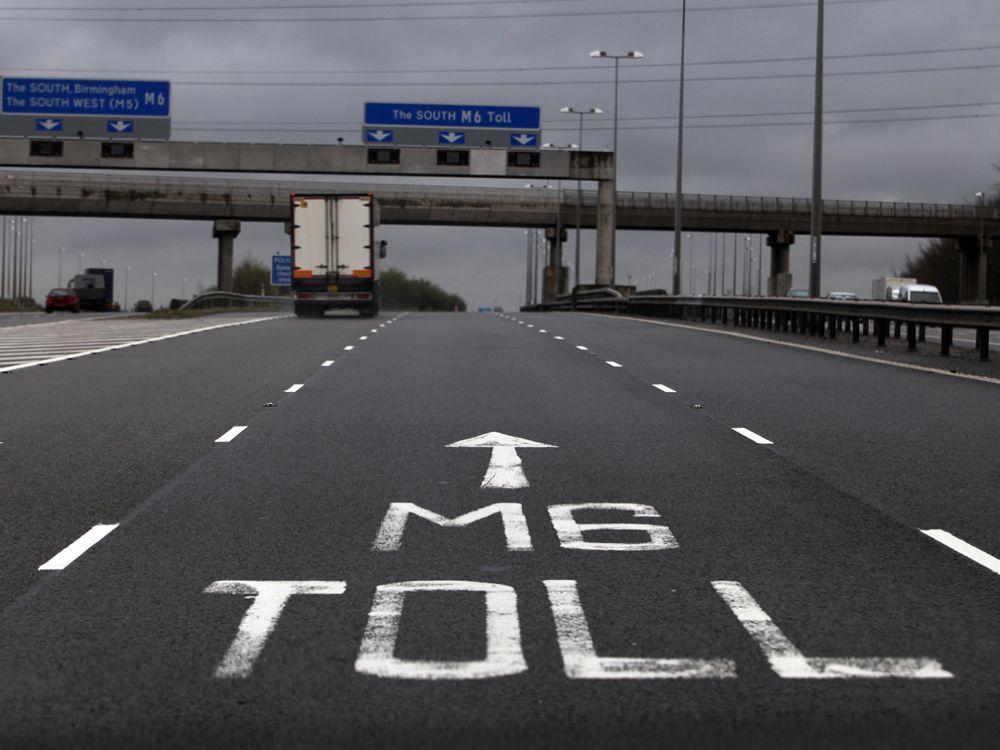
 financialpost.com
We have the biggest transit expansion in our history, for the first time we have an effective transit co-fare, and tens of billions being spent on transit projects. Is there anyone actually complaining aside from Joe on Facebook?Won't anyone think of the cars?!
C'mon. Transit systems still aren't back to pre-pandemic levels in most cases, so there's already room to grow. Additionally, tolling with the specific intent of supplementing subsidy to transit seems more than doable, as many cities have done/already do that.
To be honest, if money goes to improving transit (speed, reliability and affordability), the majority of the complaints will be from entitled car owners – not people who just want to get where they're going on time.
Maybe in 20 years time? Anyone suggesting it would lose the 905 vote.Tolls are inevitable, but the type of people hanging around here are generally the type of people who want to see it happen sooner rather than later.

I entirely agree! Imagine the years of added capacity in the subway or the highways we'd get?We already have the solution for rush hour congestion without implementing tolls or adding road capacity: remote work.
But as with so many issues, corporate greed prevents us from solving the problem (their commercial real estate portfolios will tank).
And it's wild how much people will contort themselves into pretzels to rationalize this unnecessary state of affairs.

There's plenty of congestion off-peak. The 401 is a permanent parking lot from the 404 to the 427 these days, the Gardiner is a disaster, the QEW is full, the DVP, etc. etc. ...We already have the solution for rush hour congestion without implementing tolls or adding road capacity: remote work.
But as with so many issues, corporate greed prevents us from solving the problem (their commercial real estate portfolios will tank).
And it's wild how much people will contort themselves into pretzels to rationalize this unnecessary state of affairs.
There's a veritable army of office workers who don't need to be clogging the roads. Obviously it's not a perfect solution, but it buys us a boatload of capacity at rush hour. It's a no brainer.There's plenty of congestion off-peak. The 401 is a permanent parking lot from the 404 to the 427 these days, the Gardiner is a disaster, the QEW is full, the DVP, etc. etc. ...
You can't remote work a warehouse or hospital or restaurant. While rush hour is the worst period for congestion, remote work won't solve weekend backups at a half dozen locations on the 401.
IMO the current transit pipeline, plus better maintenance, will make car-free trips viable for far more regional trips, especially towards the inner city/inner suburbs. Let drivers switch or sit in traffic. We might even convince York Region to pay for better local transit ops. (/s that last one)
Well it's also the commercial real estate tax base which is why Olivia Chow is pushing for return to office. As well as the automakers, auto insurers, retailers, restos etc who make money from people being in office. It's all greed.I entirely agree! Imagine the years of added capacity in the subway or the highways we'd get?
But I'm not 100 convinced about the commercial real estate angle seeing that small companies still are asking people to come in.
Rental and home prices are pretty unaffordable across the entirety of the GTA. Further outside the major population centres (say travelling from Shelburne to Toronto) they're going to be paying an inordinate amount in gas every week anyhow. Low-middle class stand to benefit most from money going into transit. Reliance on over-paying for transportation is a real thing here in Canada. Owning a car in any community in the largest population zone in the country shouldn't have to be mandatory for anyone. Any change will bring short-term pain for those involved, no doubt. People need time to adjust, but fearing that has been half of the political problem here in the province. Drivers suffer anyway when we do nothing and still have to repair road damage (see the current Gardiner woes).
When given the option to take fast, efficient transit, most will take it. It's ultimately the stalwarts who refuse to give up using their cars are the ones who will suffer. And they are exactly the people targeted with tolls.
Even the Financial Post has gone to bat for tolls to ease costs:
How road tolls could help ease Canada's big city housing crunch
Haider-Moranis Bulletin: A carefully designed road toll regime has the potential to generate revenue that can then be used to help develop new communities
Again, I have friends in small companies their managers/owners couldn't care less what Chow or the Landlords want. They don't even have a full floor in their buildings. They still went back into work since they saw productivity went down. This doesn't apply to every company but it seems silly to think if there is a conspiracy everyone is buying in.There's a veritable army of office workers who don't need to be clogging the roads. Obviously it's not a perfect solution, but it buys us a boatload of capacity at rush hour. It's a no brainer.
Well it's also the commercial real estate tax base which is why Olivia Chow is pushing for return to office. As well as the automakers, auto insurers, retailers, restos etc who make money from people being in office. It's all greed.